Today we're launching ResumeBench, a frontier benchmark that measures how well AI systems parse resumes and extract the information inside them.
It's something we've wanted for a long time. At Careerflow, we build tools for job seekers, and we also run a human data network that helps leading AI labs train and test their models. Working on both sides showed us how much rides on getting the content of a resume right. One small mistake when a system reads your resume can be the difference between getting an interview and never hearing back.
At A Glance: ResumeBench
Here's what you need to know about ResumeBench in under a minute.
What it is: A frontier benchmark from Careerflow that tests how well 18 AI systems parse and extract information from 300 resumes.
Why it matters to you: Resume parsers decide what recruiters see. A missed job or a wrong date can cost you an interview, and you'd never know.
How it's scored: Every field is checked word for word against human-verified ground truth. There's no AI judge and no partial credit.
Top result: LlamaParse Extract Agentic Plus leads with an F1 score of 87.16, so even the best system still gets some details wrong.
What to take away: Handwritten and scanned resumes are the hardest for AI to read. A text-based PDF gives your resume the best chance.
Why this matters if you're looking for a job
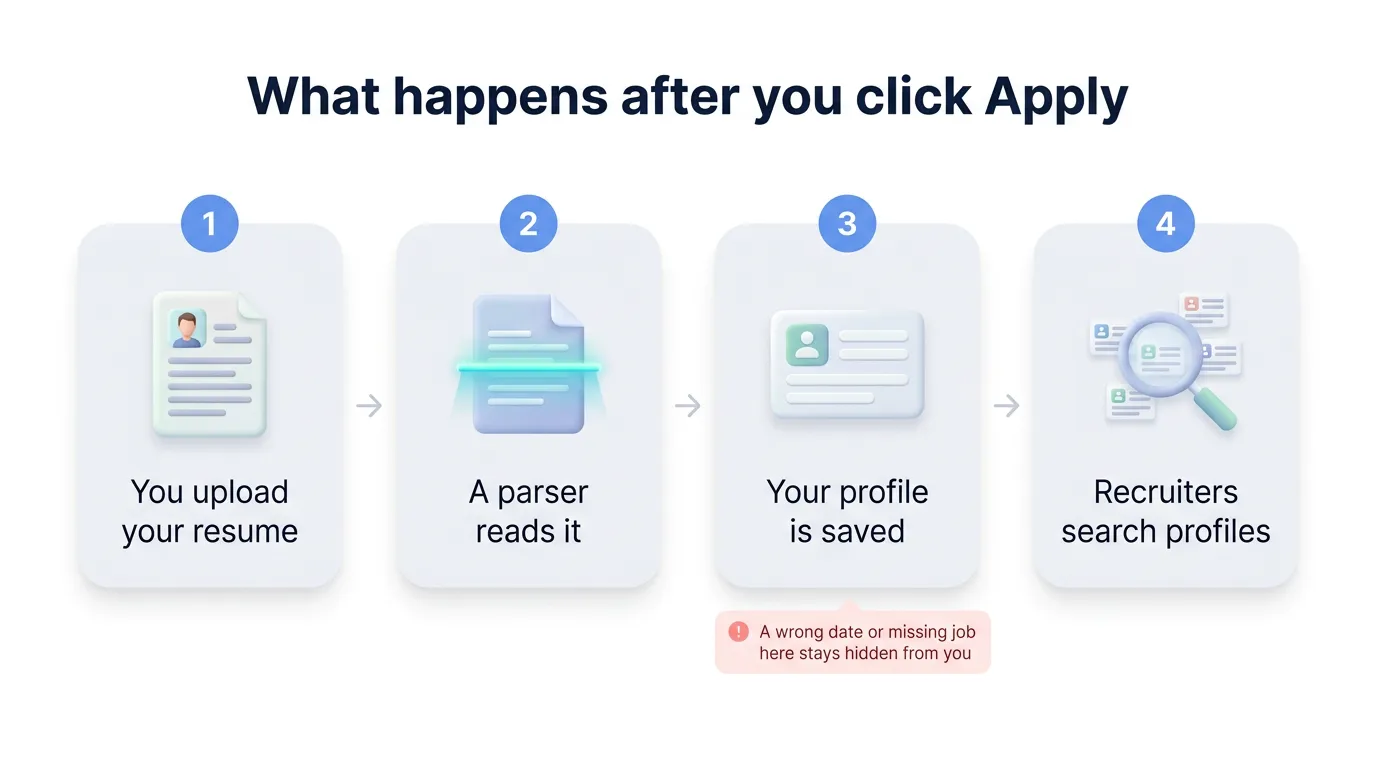
When you apply online, software usually reads your resume before a recruiter does. That software, called a resume parser, turns your file into fields like job titles, companies, dates, and skills. Recruiters then search and filter on those fields.
If the parser gets something wrong, the recruiter sees the wrong version of you. A job you held can drop out of your history. A three-year role can shrink to one. A whole line of work can land under the wrong heading. You never see it happen, and nothing tells you it did.
Until now, there was no public way to measure how often this happens or which systems handle resumes best. ResumeBench gives everyone the same test and the same scorecard. Companies that build hiring tools can see exactly where their parser fails and fix it, and each fix means more job seekers get read the way they wrote their resume.
Why reading a resume is harder than it looks
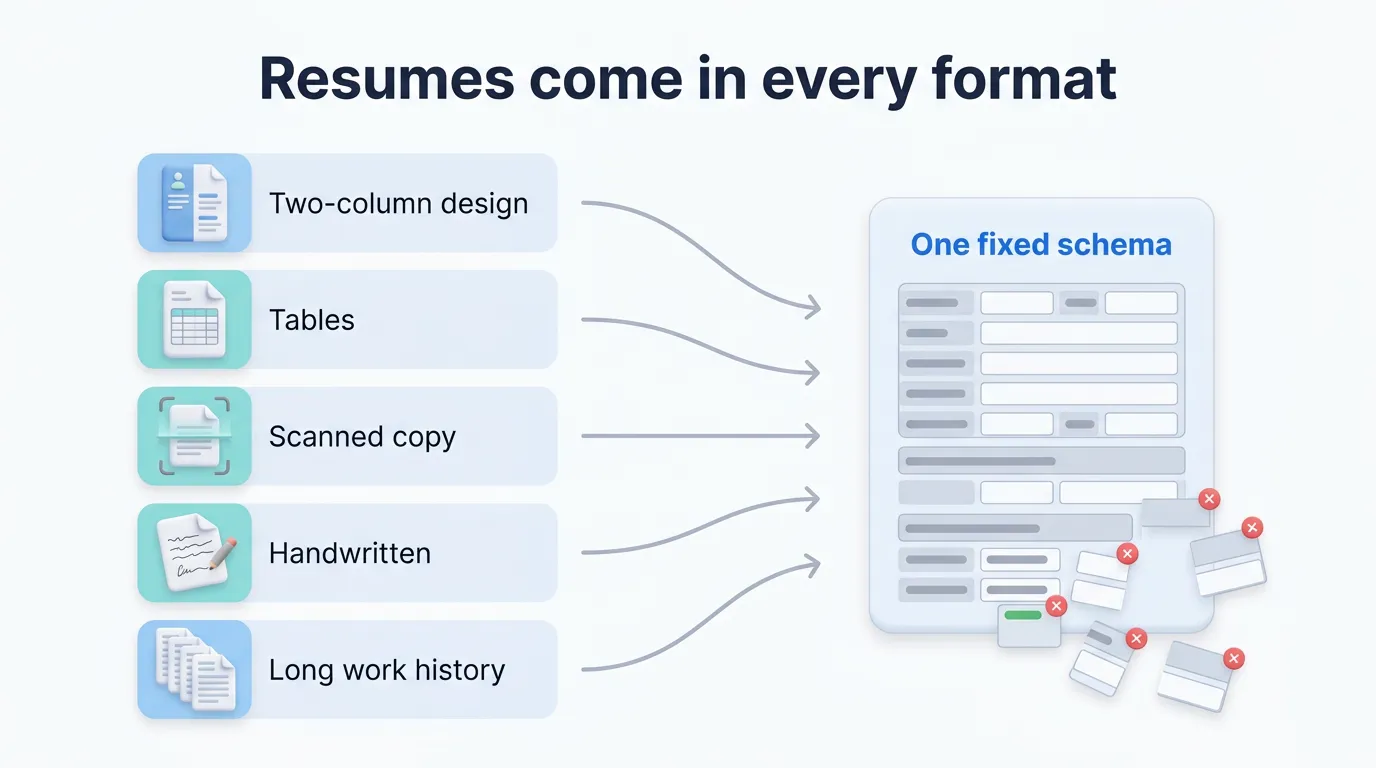
Resumes don't follow a standard structure. People have long, complicated work histories. They use Canva designs with sidebars, put content in tables, upload scans, and some even send handwritten resumes. Most systems try to fit all of that into one common set of fields, and details get lost along the way.
We saw how hard this is while building the benchmark. Even our panel of human judges sometimes struggled to agree on how certain parts of a resume should be mapped. If careful human reviewers can disagree, software has plenty of room to get it wrong.
How ResumeBench works
We built a test set of 300 resumes, 837 pages in total, covering engineering, healthcare, marketing, data, software, and more. It includes everyday resumes, Canva and LaTeX designs, templates, scans, handwritten pages, and rotated or cluttered layouts.
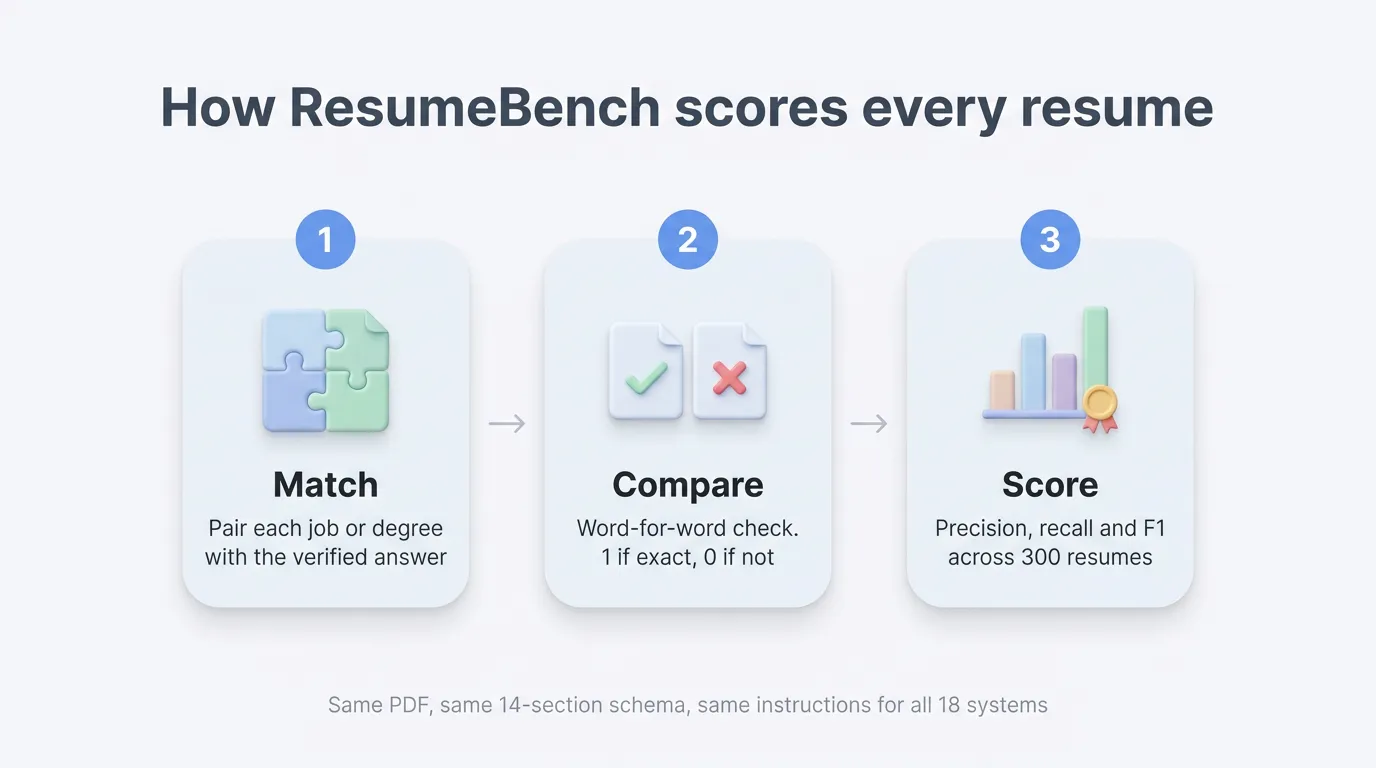
We ran 18 systems on it. Some are frontier AI models from Anthropic, OpenAI, Google, and others. The rest are document extraction tools from companies like LlamaIndex, Reducto, and Extend. You can see every system we tested on the ResumeBench site. Every system got the same PDF, the same 14-section schema, and the same instructions.
Then we scored every result strictly. The full scoring method is on the ResumeBench site.
Match. Each entry a system pulled out, like a job or a degree, is paired with the right answer using details such as company, title, and years.
Compare. After evening out spaces and dashes, every field and bullet scores 1 if it matches the human-verified ground truth word for word, and 0 if it doesn't. There's no AI judge and no credit for close enough.
Score. We calculate precision, recall, and F1 for each section, average them for each resume, then average across all 300 resumes.
We also tracked cost and speed, because the right system depends on how it's used. A tool that fills in an application form while you wait needs speed. A company processing thousands of resumes a day has to watch cost.
What we found
The top system, LlamaParse Extract Agentic Plus, scored 87.16 F1. That's the best result we measured, and it still means the best system available today gets some details wrong.
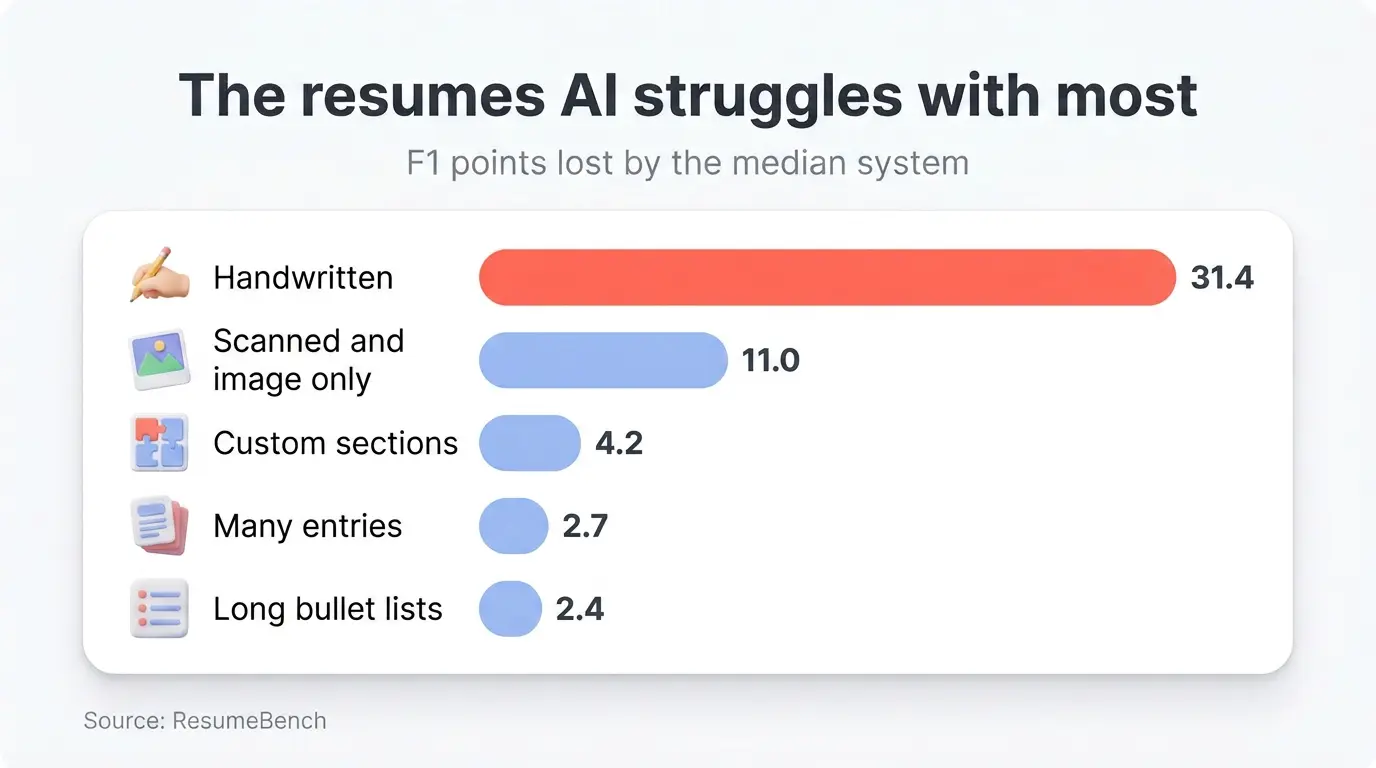
The kind of resume made a big difference. Here's how many F1 points the median system lost on resumes with each feature. You can dig into these hard resume types on the ResumeBench site.
Handwritten and image-only resumes were by far the hardest to read. If you've ever applied with a scanned or photographed resume, that's a good reason to send a text-based PDF next time.
The full leaderboard, with cost and speed for all 18 systems, is live at resumebench.ai.
Puneet left a senior engineering role at Apple to co-found Careerflow, an AI-powered job search platform backed by Techstars and used by over 1 million job seekers worldwide. He brings more than a decade of hands-on experience in AI and machine learning, built across Apple, Amazon, and Leia Inc. As CEO, he leads the product and engineering behind the tools he wished existed during his own career transitions. You can connect with him on LinkedIn
Recommended Articles
Here are some of the recommended articles from our team