


ChatGPT
.avif)
.webp)
OpenAI is testing a new "ChatGPT Jobs" feature that turns ChatGPT into a career assistant. This feature offers resume feedback, role discovery, and job search guidance directly within the ChatGPT interface.
The feature is currently in internal testing with no confirmed public release date. Early reports suggest it will function similarly to ChatGPT Health, providing a dedicated space for career-related conversations with specialized AI capabilities.
Below, we break down what ChatGPT Jobs can and can't do, how it compares to purpose-built platforms like Careerflow, and what you should be doing right now instead of waiting on a "coming soon" feature.
What is the ChatGPT Jobs agent?
ChatGPT Jobs is a specialized AI agent designed to act as a full-cycle career coach and job search assistant. OpenAI is building this feature to move beyond basic chat interactions, offering a dedicated space for professional development within the ChatGPT interface.
The feature was first seen in internal testing in early January 2026, after the release of ChatGPT Health. This suggests that OpenAI's plan is to add specialized "vertical" features to ChatGPT for important areas.
Leaked information and early reports say that ChatGPT Jobs will be a separate part of the ChatGPT interface, like the Health dashboard. You can get to it from the sidebar on a desktop or the hamburger menu on a mobile device.
Core capabilities
Recent reports and internal testing reveal several key functions designed to streamline the hiring process:
- Resume enhancement: You’ll receive AI-powered suggestions to improve your positioning and tailor content for specific industries.
- Role discovery: The agent helps identify positions that match your skills while providing guidance on how to stand out as a candidate.
- Opportunity research: You can search and compare job openings using real-time labor market data integrated directly into the chat.
- Career planning: This includes skills gap analysis and strategic advice for long-term professional growth.
Smart detection and routing
The system uses intent recognition to guide you toward the right tools. If you mention resume updates or job searching in a standard chat, ChatGPT will automatically prompt you to move the conversation to the Jobs space.
This mirrors the routing logic used in ChatGPT Health. By detecting career-related cues, the AI ensures you’re using the specialized models and data protections designed for professional tasks.
When will ChatGPT Jobs be available?
ChatGPT Jobs is currently in internal testing and isn't yet available to the public. OpenAI hasn't announced a formal release date for the consumer feature.
Based on OpenAI's typical rollout patterns, broader availability is likely months away, mid-2026 at the earliest.
TechCrunch says that OpenAI is also working on a separate "OpenAI Jobs Platform" to connect businesses with job seekers. This platform is expected to launch by the middle of 2026.
What this means for job seekers right now
If you wait for ChatGPT Jobs to start, you might lose months of job search progress. We still don't know what the feature can do, and it might not be as powerful as existing specialized tools.
Here is why you should act now:
- Early versions of new features are often limited and may not handle complex ATS requirements.
- Purpose-built tools already offer the "hiring intelligence" that OpenAI is still developing.
- Other candidates are already using advanced AI workflows to secure interviews.
Active job seekers should use purpose-built tools now, not wait for a general-purpose assistant to catch up.
What ChatGPT Jobs will likely do well
ChatGPT is already a capable writing assistant, but the new "Jobs" feature will likely handle specific career tasks.
Here is what we expect it to do well:
- Conversational career advice: ChatGPT is great at brainstorming. It can help you figure out which careers match your background or how to transition into a new industry, like moving from teaching to corporate training.
- Resume and cover letter drafting: Most people already use AI to write application materials. This feature will likely offer specialized templates and prompts designed to make your writing sound more professional.
- Interview preparation: You can use the AI to run mock interviews. It’s particularly helpful for practicing the STAR method or getting feedback on how clear your answers are.
- Career exploration: The tool can act as a researcher, helping you understand industry trends and the specific skills you need for different roles.
What ChatGPT Jobs probably won't do well
While ChatGPT excels at conversation, it isn't a full management system. If you try to use it as your only job search tool, you'll quickly run into some major roadblocks.
No job tracking or organization
ChatGPT is a conversation interface, not an application tracker. It can’t show you a visual pipeline of your applications or store deadlines for you.
When you’re managing 20 or 30 active applications, a chat window just won't cut it. You need a dedicated dashboard to see where you stand with every company at a glance.
No ATS optimization or scoring
ChatGPT can suggest ways to improve your resume, but it can’t tell you how a computer will read it. It doesn't run your document against actual Applicant Tracking System (ATS) algorithms.
Purpose-built optimizers analyze your resume exactly like a recruiter's software does. They provide a match score and flag formatting issues, like tables or columns, that might cause a "robot" to reject your application.
No browser extension or autofill
Applying for jobs is a difficult task. ChatGPT Jobs won't let you save a role from LinkedIn or Indeed with a single click. It also won't autofill those long, repetitive application forms on sites like Workday or Greenhouse.
Dedicated tools can save you 10 minutes per application. Over the course of a week, these tools can save you several hours of your life.
No LinkedIn integration
ChatGPT can write a nice headline, but it can't see your actual LinkedIn profile. It doesn't know how you rank for specific keywords or how to fix your "searchability" for recruiters.
To get noticed, you need a tool that understands how the LinkedIn Recruiter search engine works. General writing isn't enough to boost your visibility.
Limited long-term personalization
ChatGPT conversations are often temporary. Even with its memory features, it isn't designed to hold your entire work history, goal list and application history in one structured place for months.
Specialized tools provide the continuity you need. They store your different resume versions and track your progress from the first click to the final offer.
ChatGPT Jobs vs. purpose-built job search tools
While ChatGPT can help you brainstorm or rewrite a bullet point, it lacks the specialized "hiring intelligence" that makes a job search successful.
Dedicated platforms like Careerflow are built for the purpose of getting hired. They don’t just write text; they help you manage the entire process from start to finish.
Comparison table graphic: Visual version of the ChatGPT Jobs vs. Careerflow capability comparison table, styled for easy scanning
Verdict: ChatGPT Jobs will likely be useful for casual career questions and initial drafting. However, serious job seekers need more than a chat window. If you're managing multiple applications, you need the organization, integrations and job-specific tools that only a purpose-built platform provides.
Why this matters: The AI job search landscape in 2026
The job market is shifting rapidly. According to LinkedIn’s 2026 research, 81% of job seekers already use AI in their search. At the same time, 93% of recruiters plan to increase their own AI usage this year.
This creates a high-tech arms race. According to LinkedIn Economic Graph, applications have doubled since 2022, meaning competition for any single role is dramatically higher than it used to be. Organization and speed are no longer "nice to have", they are survival skills.
The "everything app" strategy
OpenAI is trying to turn ChatGPT into an "everything app." Following the launch of ChatGPT Health, the new "Jobs" feature shows they want to handle every major part of your life. Even Microsoft is getting in on this with "Career Coach" updates for Copilot.
This creates a fragmented landscape. Your career data might end up scattered across different AI platforms, none of which were built specifically to manage a job search from start to finish.
What job seekers actually need
Access to AI writing is everywhere. You don’t need more tools that just "write stuff"; you need a way to manage the chaos.
The real challenge is staying consistent over a search that could last months. You need a system that tracks dozens of applications, handles networking notes and prepares you for interviews. General AI assistants solve the content part, but they ignore the technical work required to actually land an offer.
What to do instead of waiting for ChatGPT Jobs
If you wait for ChatGPT Jobs to launch, you might lose months of progress. The job market moves fast, and you shouldn’t hit pause on your career for a "coming soon" item.
Instead of waiting for a feature with no release date, you can build a more powerful job search today. Purpose-built platforms like Careerflow already offer the job search tools you need to beat applicant tracking systems and stay organized.
Build your job search stack
You don't need random tools to handle your job search; you just need one specialized tool to handle everything for you.
- Resume optimization: Use tools that provide ATS scoring and keyword analysis. General writing feedback isn't enough; you need to know exactly how a computer will read your document.
- Job tracking: Stop using spreadsheets. Centralize your applications in a visual dashboard that tracks deadlines and follow-up reminders.
- LinkedIn visibility: Optimize your profile based on how recruiter search algorithms actually work. This ensures you show up in more searches without spending hours on manual updates.
- Application efficiency: Use browser extensions to save jobs with one click. Tools that autofill repetitive forms can save you hours every week.
👉Want to go deeper?: 5 AI Job Search Tools to Use Right Now
Use ChatGPT for what it’s good at
Even without the "Jobs" feature, ChatGPT is an excellent brainstorming partner. Use it for the creative parts of your search, but leave the technical execution to specialized tools.
Use ChatGPT for:
- Exploring new career paths or industry transitions.
- Drafting initial bullet points or "hook" sentences for cover letters.
- Practicing interview answers using the STAR method.
- Researching a company’s mission and culture before an interview.
Don't use it for:
- Tracking dozens of active applications.
- Storing your professional history long-term.
- Checking if your resume format is "readable" by an ATS.
- Managing your application calendar and deadlines.
👉 To Learn More: How To Use ChatGPT for Your Job Search
How Careerflow helps where ChatGPT Jobs falls short
While ChatGPT is a powerful chatbot, it isn’t a dedicated job search system. Careerflow is built to handle the operational side of your search, the parts where a simple chat window usually fails.
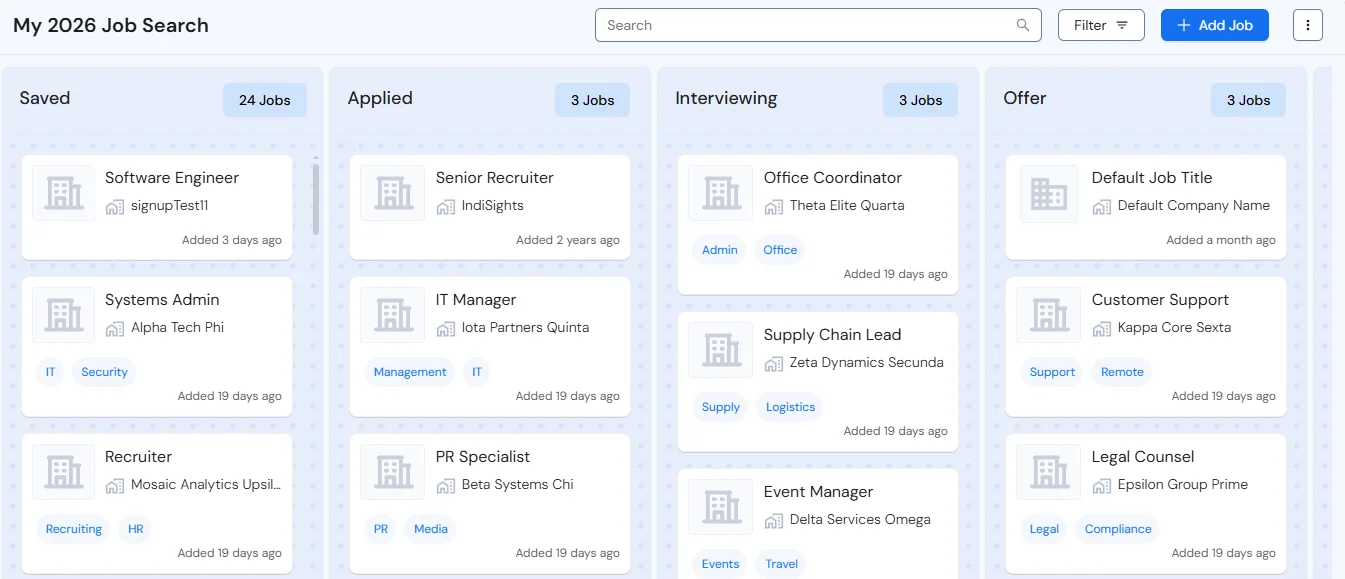
Job tracker
Managing 20 or 30 applications in a chat history is impossible. Careerflow provides a visual board to organize every stage of your search, from initial research to the final offer.
- One-click saving: Use our browser extension to save jobs from over 100 sites like LinkedIn and Indeed instantly.
- Smart reminders: Get automated alerts for follow-ups, interview dates and deadlines so nothing slips through the cracks.
- Centralized notes: Attach tailored resumes and specific interview notes to each individual application.
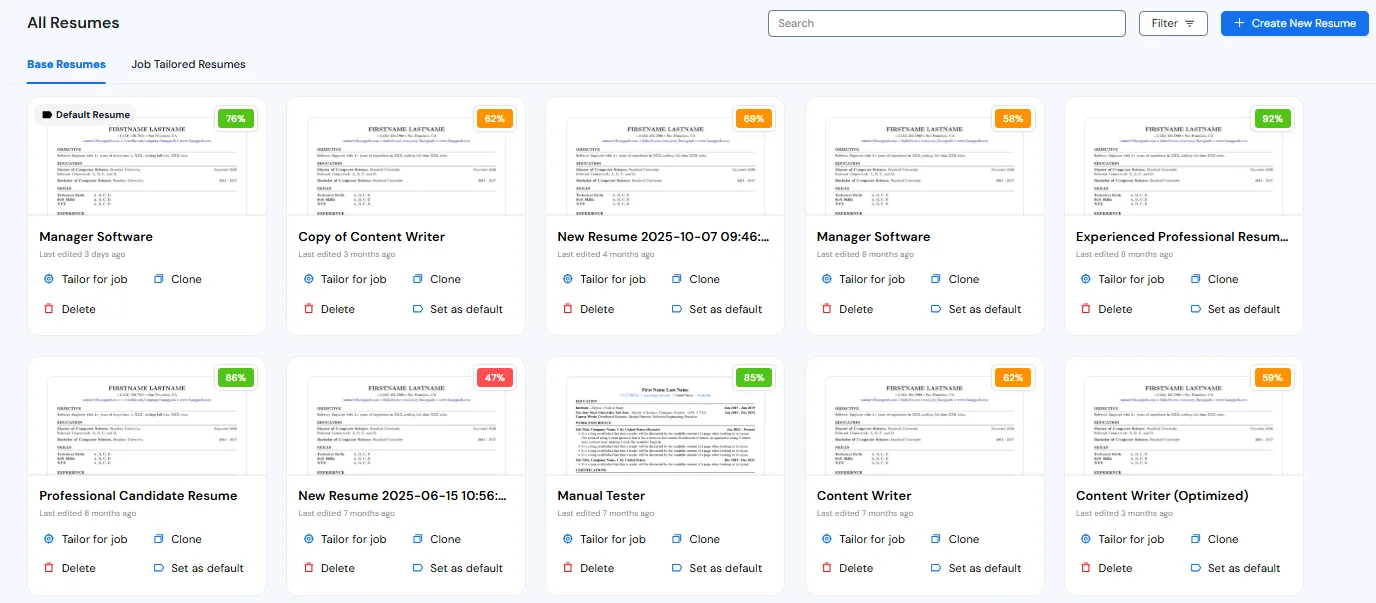
Resume builder and optimizer
ChatGPT can rewrite your text, but it can’t guarantee that ATS will read it. Careerflow focuses on ATS to ensure you actually get seen.
- ATS-friendly templates: Our layouts are pre-tested to pass through ATS algorithms without any formatting errors.
- Keyword analysis: Get a match score against specific job descriptions and see exactly which skills are missing.
- AI bullet writer: Generate achievement-focused bullets that use real metrics to prove your impact.
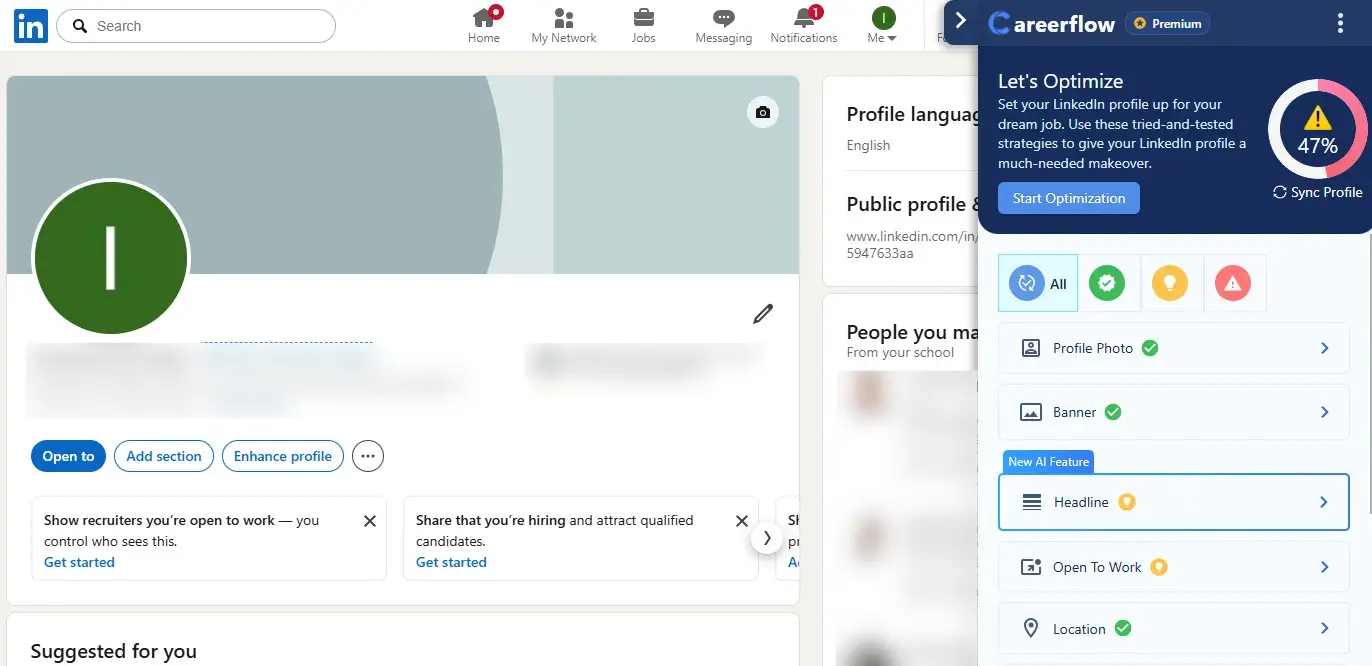
LinkedIn optimizer
General writing advice isn’t enough to fix your LinkedIn visibility. You need to understand how recruiter search behavior works.
- Profile scoring: Receive an instant 0–100 score based on how well your profile is optimized for search.
- Keyword recommendations: See the specific phrases you need to include to rank higher in LinkedIn Recruiter searches.
- Interactive wizard: Get step-by-step guidance to fix your headline and summary for maximum searchability.
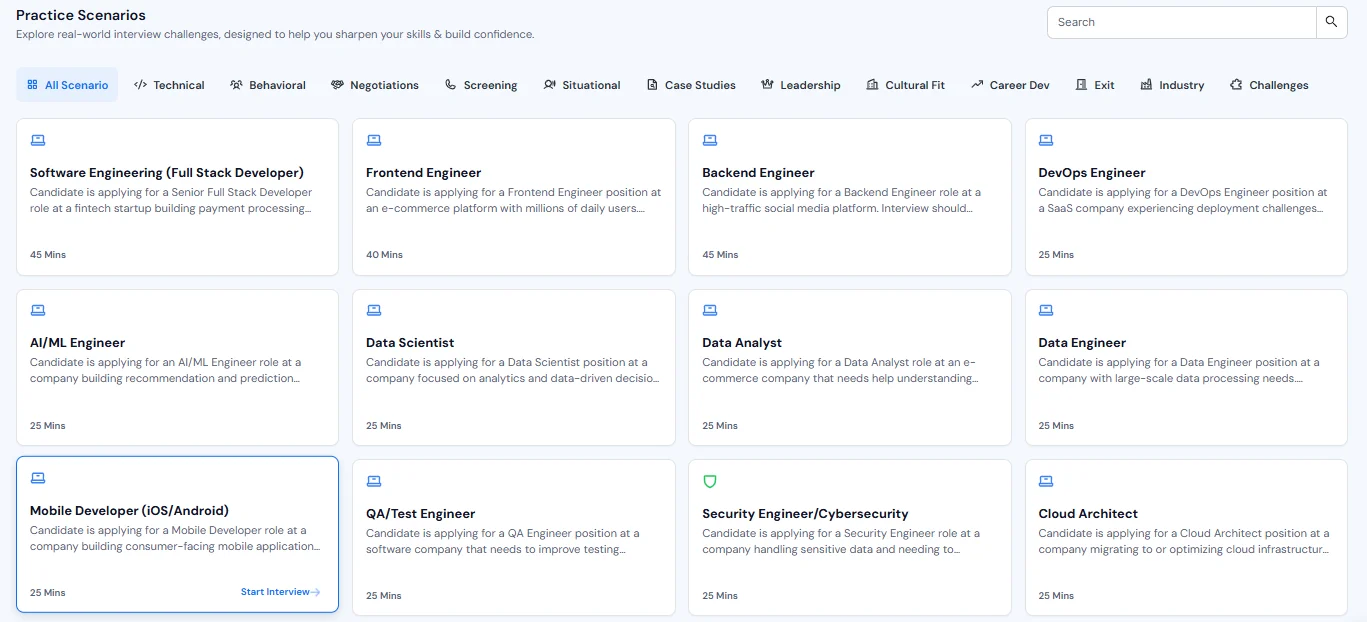
Mock interview tool
ChatGPT’s voice mode is a good start, but our tool provides a realistic simulation of a high-stakes interview.
- Job-specific questions: Practice with questions tailored to the exact role and company you’re targeting.
- Performance feedback: Receive scoring on your clarity, structure and use of the STAR method.
- Zero pressure: Refine your stories through repeated practice so you feel completely confident before the real interview.
.webp)

%20Which%20Should%20You%20Use.webp)
