Career Advice
.avif)
.webp)
Most professionals don't see a layoff coming until it's too late to get ready. Even though the warning signs usually show up weeks or even months in advance, it's easy to miss them when you're busy with your daily tasks. Recognizing these patterns early allows you to transition from a reactive state to a proactive career strategy.
This guide breaks down the most reliable warning signs into two distinct categories. First, we examine macro-level signals that your company is heading toward a reduction in force. Second, we identify personal indicators that your specific role may be at risk.
Just because you see one sign doesn't mean you're going to be laid off soon. However, seeing a lot of them in both groups calls for quick and quiet action to protect your job. If you have already been affected, skip to our guide on Amazon Layoffs 2026: What to Do If You're Affected for step-by-step guidance on severance and benefits.
Company-level warning signs
Layoffs rarely happen in a vacuum. Organizational changes nearly always come first, driven by financial pressure or a shift in long-term plans. These company-level signals aren't always aimed at you personally, but they tell you how much risk to assign to your current role.
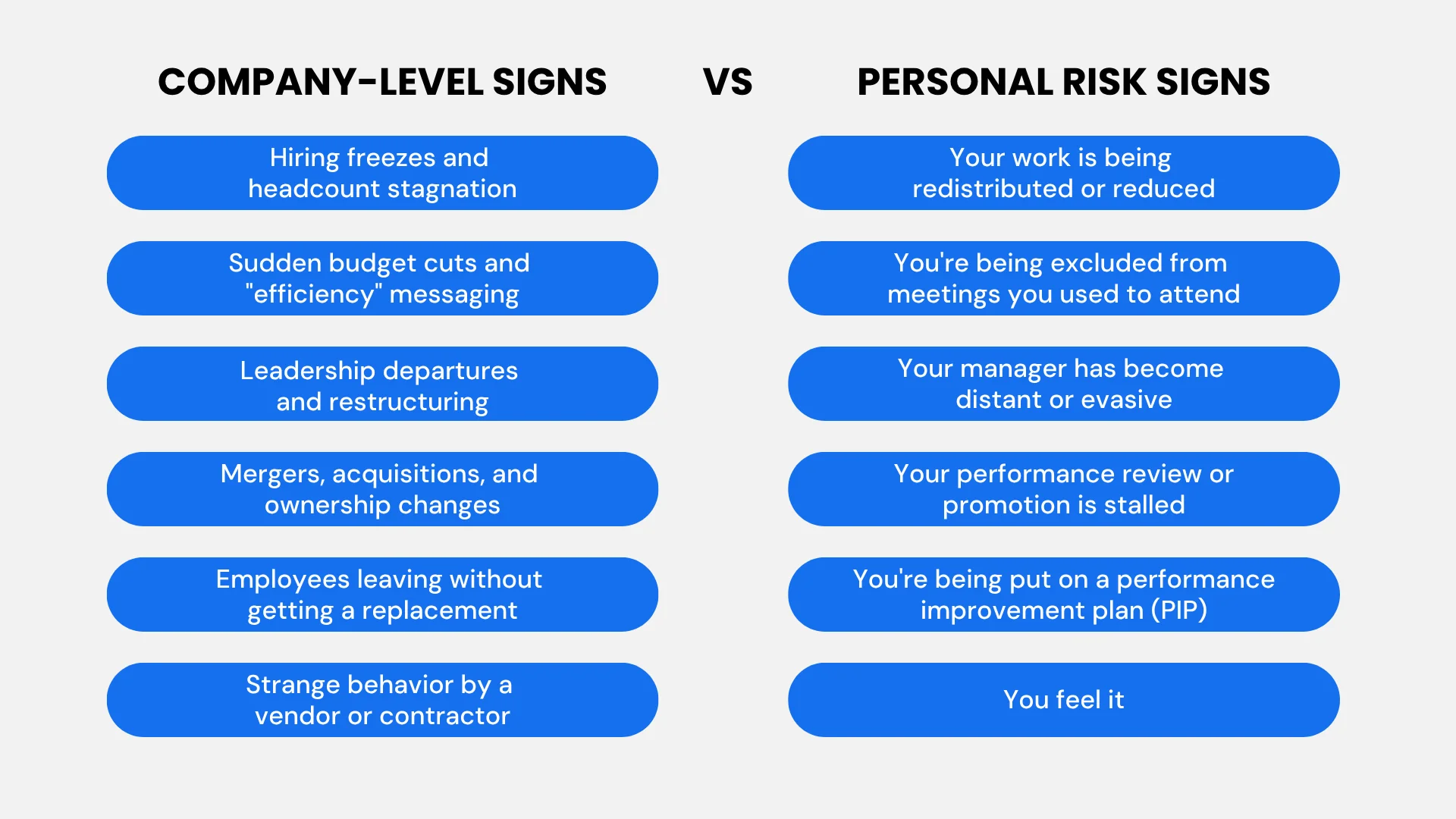
Hiring freezes and headcount stagnation
One of the most reliable signs that a company is about to lay off workers is an official hiring freeze. When a company stops hiring, it's trying to control payroll costs before making involuntary cuts.
Look out for job openings that stay open for months or job postings that are quietly taken down without anyone being hired. Watch for all-hands announcements that frame the company as being "more deliberate" or "intentional" about hiring. If your department is only partially frozen, it means that your job is being put on hold in favor of areas that are growing faster.
Sudden budget cuts and "efficiency" messaging
When leaders start talking about "rightsizing," "operational excellence," or "doing more with less," pay close attention. These words often show up in earnings calls or internal memos months before a layoff happens.
Getting rid of perks is often the first step toward visible signs of margin compression. If it's hard to get travel approvals, gym memberships, or free lunches, then the company is probably having trouble with cash flow. Leadership usually doesn't take away perks that help build culture unless they really need to cut costs before doing something more drastic about payroll.
Leadership departures and restructuring
Sudden exits from the C-suite or VP level, especially with vague explanations, often precede significant structural changes. If a CFO leaves shortly before an earnings call or a division head exits without a named successor, the organization's stability is shifting.
New executives tasked with "transforming" or "streamlining" the business almost always conduct headcount reviews within their first 90 to 180 days. Be on the lookout for new org charts or a group of senior leaders leaving at the same time.
Mergers, acquisitions, and ownership changes
M&A activity is a primary driver of professional redundancies. When two companies combine, overlapping functions in HR, finance, legal, and marketing are usually consolidated, leading to the elimination of one set of roles.
The risk is highest for employees in the acquired company or those whose roles duplicate a function in the parent organization. Even if you survive the initial integration, a second wave of cuts often follows 12-18 months later, once leadership has assessed the full combined workforce.
Employees leaving without getting a replacement
When people quit and their positions aren't backfilled, especially in your department, the team headcount quietly shrinks. If three people have left in the last six months and they haven’t been replaced, then the leadership is likely eliminating those roles permanently.
Also, keep an eye out for work being moved around. If your team is quietly taking on tasks from another team or department that has been cut, that's a sign of where the company is going.
Strange behavior by a vendor or contractor
It's common to hire management consultants (like McKinsey, Bain, or Deloitte) or organizational design firms before laying off workers. These jobs often include analyzing headcounts and making suggestions for restructuring.
On the other hand, if the company is cutting back on spending on contractors and freelancers by a lot, it's likely preparing for larger workforce cuts.

Personal risk warning signs
These signals are more specific. They suggest you may be at elevated personal risk, even if broader layoffs aren't certain.
Your work is being redistributed or reduced
If assignments are being quietly moved to colleagues, or if projects you were leading are being reassigned, pay attention. Companies rarely reduce an employee's responsibilities without a strategic reason. This is different from normal workflow variation.
A steady drop over a few weeks is the pattern to look for. Your boss may also be less interested in your work or less open about future projects when this happens. If your workload has noticeably dropped without a clear reason, your role is likely being "de-risked" ahead of a potential cut.
You're being excluded from meetings you used to attend
Being taken out of regular meetings, especially those that are about planning, strategy, or making decisions, is a strong sign. Being included in forward-looking discussions signals that leadership sees you as part of the company's future. Being left out of them means the opposite.
Also, pay attention to small changes in how people talk to each other. You may be excluded from previous email threads or key client meetings or find out about decisions after the fact. If you are no longer in the room where decisions happen, your role may no longer be essential.
Your manager has become distant or evasive
A manager who suddenly becomes harder to reach or visibly uncomfortable in one-on-ones may have information they can't yet share. This is distinct from a manager who is simply busy with a high workload.
The pattern to watch for is a consistent change in the quality of their engagement with you specifically. Look for shorter meetings, vague answers to direct questions about upcoming projects, and a noticeable reduction in their interest in your professional development. If your supervisor is avoiding eye contact or being evasive about the team's long-term roadmap, they may be aware of pending structural changes.
Your performance review or promotion is stalled
If a promised promotion has not materialized or a performance review is postponed without explanation, treat it as a signal that your position is under review. Companies typically don't invest time or capital into developing employees they plan to eliminate.
A sudden freeze on career conversations is especially telling if your company culture previously emphasized growth and development. When career conversations go quiet, it usually signals that leadership has paused all non-essential personnel decisions until a headcount reduction is finalized.
You're being put on a performance improvement plan (PIP)
A PIP is sometimes used as a genuine development tool, but in many organizations, it functions as documented justification for termination. If you are placed on a PIP, treat it as a serious signal regardless of the stated purpose.
Consult an employment attorney to understand your rights before signing any documentation. Carefully record your work and communications, and begin quietly updating your resume and professional network. Regardless of the eventual outcome, a PIP indicates that your current standing within the organization is no longer secure.
You feel it
Experienced professionals who have survived layoffs often describe "knowing" something was wrong weeks before it happened. Trust your instincts. If the office culture has shifted, colleagues seem nervous, and your manager is acting differently toward you, those feelings are likely grounded in reality.
Instinct is not the same as absolute certainty, but it is a valid reason to begin your preparations. If things feel off, they probably are. Use that intuition as a catalyst to ensure your professional assets are ready for a quick transition.
What to do if you’re seeing these signs
Seeing warning signs doesn’t mean a layoff is inevitable. It means preparation starts now. The goal is simple: stay ready, stay calm and avoid drawing attention.
Update your resume while you’re still employed
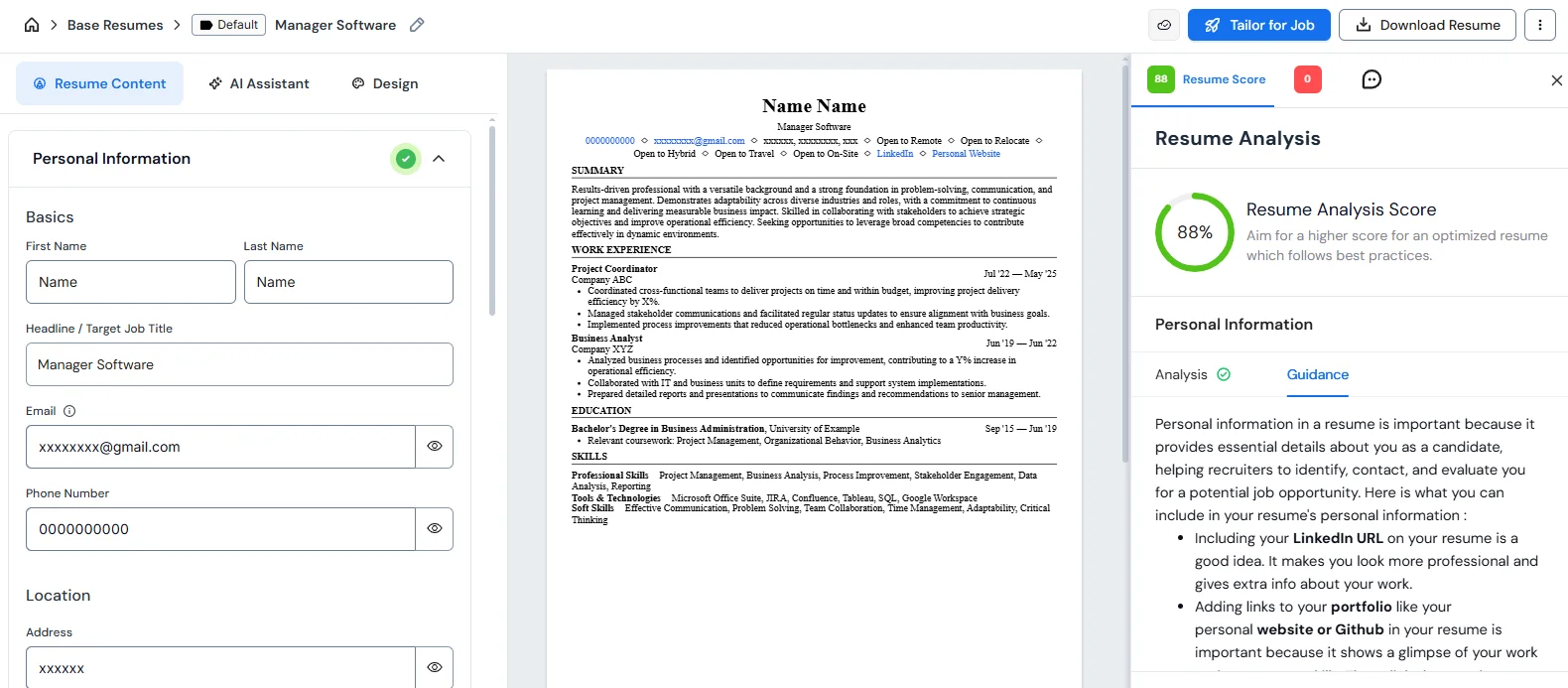
It's easier to find a new role when you already have one. Start by adding recent accomplishments and specific metrics to your current resume. Refresh your skills section and tailor your headline for your next target position.
Use a structured tool like Careerflow’s Resume Builder to:
- Apply ATS-friendly formatting
- Identify missing keywords from job descriptions
- Improve clarity and impact
Strengthen your LinkedIn profile
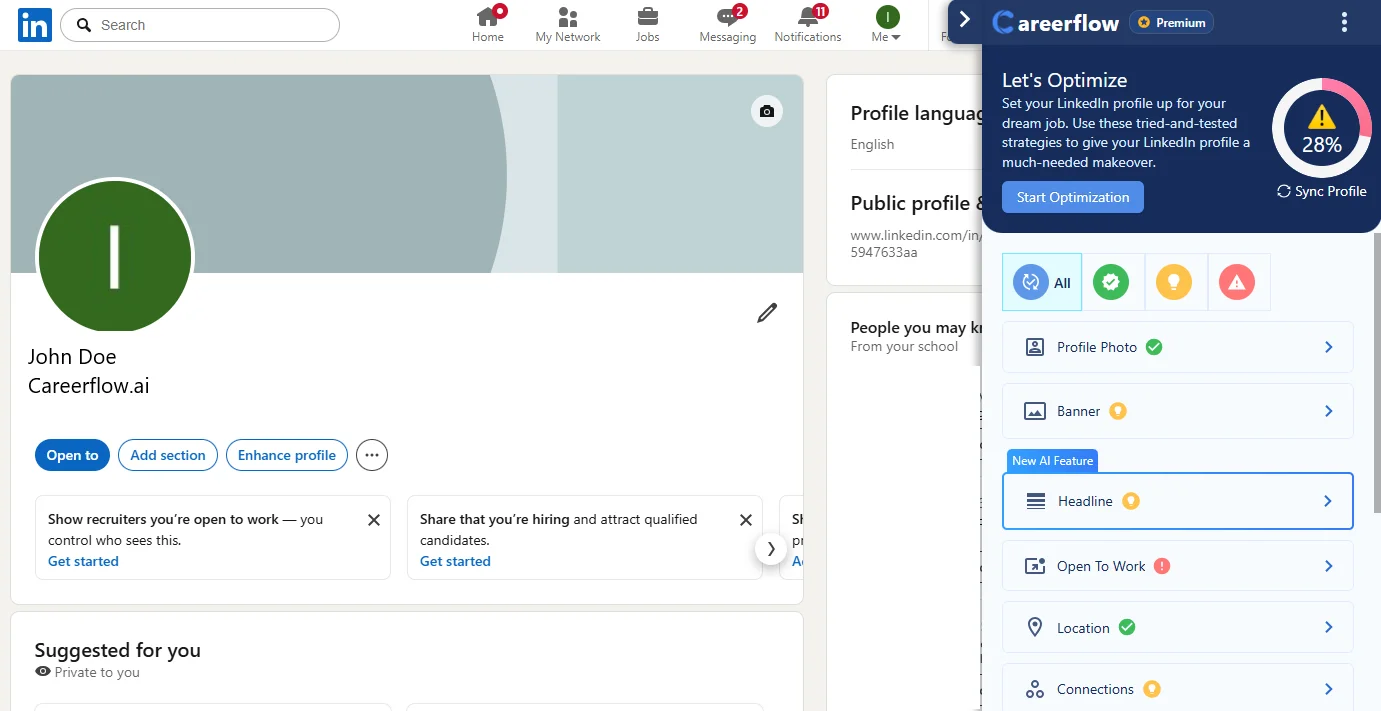
Recruiters search LinkedIn actively for qualified talent before they post open roles. A strong profile keeps you visible to recruiters even if you aren't applying yet. Update your headline with your target title and two key skills.
Refresh your "About" section to reflect your current expertise and career goals. Enable the "Open to Work" feature with "recruiters-only" visibility to stay discreet.
Use Careerflow's LinkedIn optimization tool to:
- Spot missing keywords
- Improve search visibility
- Position your experience more clearly.
Quietly activate your network
According to research from Boomset, “...approximately 85% of all open positions are filled through networking…”. Reconnect with former colleagues and attend industry events to warm up these relationships. You don't need to express your concerns about layoffs.
Focus on being a "known quantity" before you have an urgent favor to ask. Engaging with your contacts now makes it natural to reach out later. Consistent networking provides a passive stream of market insights and hidden opportunities.
Start tracking opportunities passively
Start monitoring job boards to understand current market expectations and salary trends. Set up job alerts for your target roles to see which companies are hiring. This research phase helps you calibrate your requirements without the pressure of an immediate move.
Use our Job Tracker to save interesting roles from any site with one click. Managing a passive pipeline allows you to move fast if you need to. You'll know exactly where to focus your energy if a layoff becomes reality.
Know your financial position
Calculate how many months of essential expenses you can cover without a paycheck. Aim for a buffer of three to six months to reduce financial stress during a search.
Also review:
- Your company’s severance policy
- Your 401(k) vesting schedule immediately
Check if you are close to any significant equity or bonus milestones. Knowing your numbers helps you make informed decisions about when to stay or go. Reducing discretionary spending now creates a larger safety net for the future.
Document your work
Gather records of your key accomplishments and led projects while you still have system access. Save performance reviews, positive feedback, and metrics that demonstrate your direct value. Ensure you follow all company IP policies when saving work examples.
This documentation makes your resume more concrete and provides evidence of your success. It also protects your interests if you need to discuss termination terms. Having these details ready saves hours of reconstruction work during a job hunt.
👉 If the situation progresses, understanding what comes next is critical. This Amazon layoffs 2026 guide breaks down what to expect after a layoff and how to navigate the transition.
.webp)
.webp)