Career Advice
.avif)
.webp)
The words your employer uses during a workforce transition are very important for your health and financial security. Both situations mean you won't be working for a while, but being laid off and being furloughed affect your paycheck, health insurance and return-to-work expectations in ways that matter.
What is a furlough?
A furlough is a mandatory, temporary period of unpaid leave. You remain an employee, but you don't work or receive pay for that time. Employers use this strategy when they intend to bring you back once conditions improve.
Understanding your status: Your job still technically exists during a furlough. You usually keep your benefits, and your employer often continues paying their share of your health insurance premiums. You also keep your seniority and any paid time off you earned.
Duration and intent: Furloughs are usually short, lasting a few weeks or until a specific event ends. This could be a government shutdown or a temporary budget crisis. Your employer uses this time-limited approach with the specific goal of returning you to work.
Collecting unemployment benefits: Even though you're still employed, you can often collect unemployment benefits during your leave. Rules for this change depending on your state and how many hours you are missing. File your claim immediately after your furlough begins to avoid missing out on payments.
Government versus corporate furloughs
Understanding the difference between government and corporate furloughs is crucial for your career planning. While both involve unpaid leave, the rules for your return and your paycheck differ significantly.
Federal government furloughs: These occur when Congress fails to pass spending bills, often triggering a government shutdown. Essential workers continue their duties without immediate pay, while others are sent home. Federal employees have historically received retroactive pay once the funding crisis resolves (U.S. Office of Personnel Management).
Corporate furloughs: These are internal business decisions. Companies use them during economic downturns, seasonal slowdowns, or restructuring to avoid permanent layoffs. Unlike government leave, retroactive pay is rarely guaranteed and is not the industry norm.
Knowing which type applies to you determines what to expect from your pay, your benefits and your return timeline.
What is a layoff?
A layoff is a permanent separation from employment. Your position is eliminated, and there's no guaranteed return date. Unlike a furlough, the company does not expect to recall you to your former role.
Understanding your status: When you are laid off, your employment ends immediately or on a specific date. Your employer-sponsored health insurance stops, which triggers special enrollment windows for other plans. You are also eligible to file for unemployment benefits.
Severance packages: Companies aren't legally required to offer severance pay in most cases. However, many choose to provide it for salaried employees or those with long tenure. If you receive an offer, it's often negotiable before you sign.
To Know More 📢: How to Negotiate a Severance Package After a Layoff
Permanent vs. temporary: Some companies let people go with the hope of hiring them back, but you should think of the change as permanent. When companies restructure and cut a lot of jobs, those jobs are no longer available. Plan your next move immediately.
Furlough vs layoff: At a glance
Understanding these differences is key to managing your next steps. Use this table to compare how each situation impacts your job status and financial security.
The final verdict
A furlough is temporary and keeps your employment status active. A layoff ends your relationship with the company completely. Both situations qualify you for unemployment benefits. However, a layoff requires more immediate action. You must prioritize your health insurance choices, review any severance offers and begin your job search right away.
Understanding your pay, benefits, and taxes
A furlough or layoff hits your finances hard and fast. Here's how each status affects your income, health insurance and taxes so you know what to expect.
What a furlough means for you
- Pay: You receive no wages during your time off. Salaried employees have their pay reduced to zero, and hourly workers are simply not scheduled for shifts.
- Health insurance: Your employer typically continues paying their share of premiums to keep your coverage active. Confirm your company's specific policy in writing with HR.
- Unemployment: You can often collect unemployment benefits during a furlough. Some states require you to be out of work for a certain number of days before you can file a claim, while others let you file a claim for partial unemployment if you work fewer hours. File your claim immediately after your leave begins rather than waiting.
- Taxes: Unemployment benefits count as taxable income. Set aside about 10% of these payments or ask for federal tax withholding when you file your claim.
- PTO: Most companies forbid using paid time off during a furlough to save costs. Check your written agreement to be certain.
What a layoff means for you
- Pay and PTO: You receive a final paycheck covering all hours worked through your last day. Many states require employers to pay out any unused, earned vacation time. For instance, in California, vacation pay that has been earned must be paid out when the job ends (California Labor Code § 227.3).
- Severance: Severance is not legally required, but it is common for many roles. Initial offers are often negotiable. If you are 40 or older, you typically have at least 21 days to review your agreement (U.S. Equal Employment Opportunity Commission). Before you sign, make sure to read the fine print. Look over the amount and timeline, the terms of your health insurance, the payout for your PTO, the vesting of your 401(k), the non-compete clauses and the reference policies.
- Health insurance: Coverage usually ends on your last day or at the end of the month. You then have 60 days to sign up for COBRA or a new marketplace plan (U.S. Department of Labor).
- Unemployment: File for benefits immediately upon being laid off. Do not wait for your severance to end, as rules about how severance affects your claims vary by state.
- Taxes: Severance and unemployment benefits are both taxed as income. Plan for these to appear on your year-end tax return.
What to do if you have been furloughed
A furlough is not a guarantee of your return. Treat it as a warning sign and take these steps to protect your future.
Immediate action plan
- File for unemployment: Submit your claim as soon as your furlough begins. If you return to work quickly, you simply stop claiming benefits. If the furlough lasts, you will have already cleared any waiting period.
- Confirm insurance in writing: Ask your HR department if you must pay both the employee and employer portions of your premiums. Get the answer in writing to avoid future surprises.
- Start exploring quietly: Update your resume and refresh your LinkedIn profile now. Reconnect with your professional network while staying professional with your current employer.
- Track your applications: Use a job tracker to organize every role you explore. This keeps you prepared if the company decides not to recall you.
- Ask direct questions: Ask your employer for a specific return date and the criteria for your recall. Clear communication helps you make informed decisions about your career.
What to do if you have been laid off
A layoff is a permanent change. Move quickly to secure your financial and medical stability with these steps.
Immediate action plan
- Review severance carefully: If you are 40 or older, federal law gives you at least 21 days to review your agreement. Check every detail, including the payout schedule, health insurance terms and reference policies. Consult an attorney if you have questions before signing.
- File for unemployment: Submit your claim immediately after your final day. Do not wait for your severance pay to end, as state rules vary.
- Evaluate health insurance: You have 60 days to sign up for COBRA or a new marketplace plan. If joining a partner's plan, check their requirements, as they often have a 30-day window.
- Track your search: Use a job tracker from your first day. Managing 10 to 30 applications in your head or a messy spreadsheet is rarely successful.
- Tailor every resume: Applicant tracking systems scan for specific keywords. A resume tailored to a specific job description outperforms a generic resume sent to many.
To Know More 📢: Amazon Layoffs 2026: Latest News and What to Do If You're Affected
How to manage your job search with Careerflow
Staying organized is your greatest advantage during a job search. Whether you are navigating a precautionary furlough or a permanent layoff, Careerflow provides the tools to streamline your transition.
Job Tracker (for layoffs and precautionary furlough searches)
Install the Careerflow browser extension to save jobs from any site with one click. This tool keeps your entire search in one place so you never miss a deadline.
- Organize by stage: Move roles through the Researching, Applied, Interviewing and Offer stages.
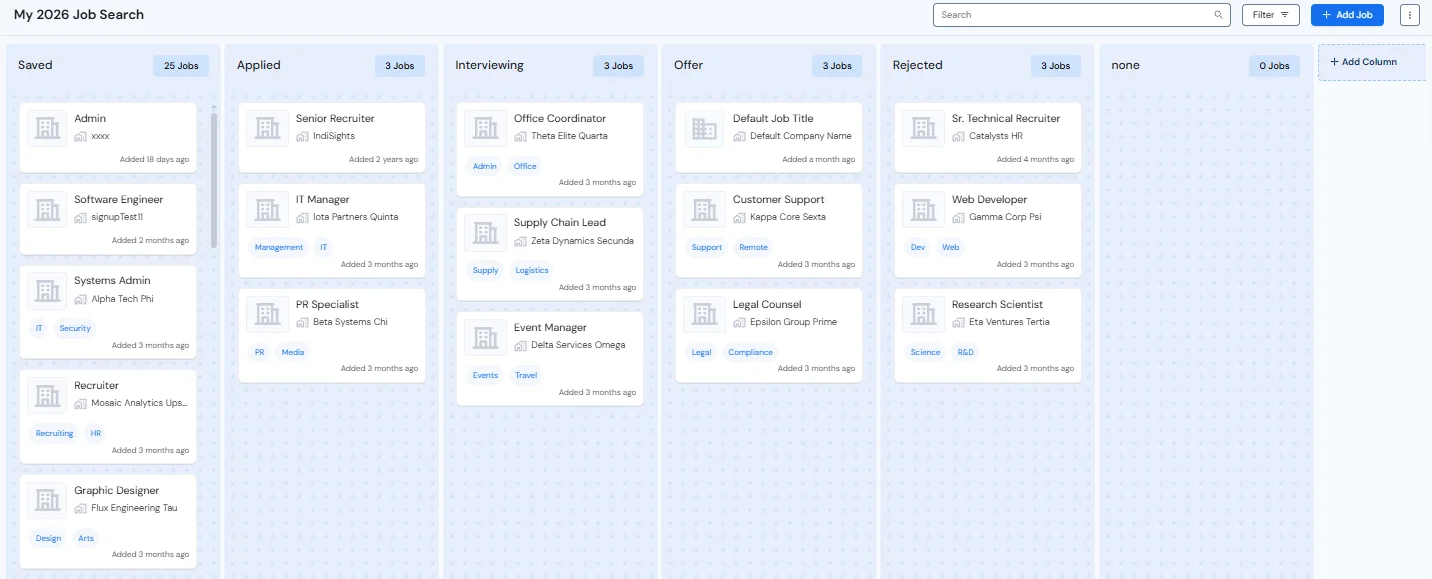
- Set reminders: Create follow-up alerts so no opportunity slips through the cracks.
- Attach key documents: Save tailored resumes and personal notes to each application for quick reference.
Resume Builder (update whether furloughed or laid off)
Update your resume immediately to reflect your most recent accomplishments. Our tools help you stand out to recruiters and pass automated screenings.
- Optimize for keywords: Run your resume through the Optimizer against specific job descriptions to find missing terms.
- Write impact bullets: Use the AI bullet writer to turn basic responsibilities into achievement-based statements.
- Pass the ATS: Ensure your profile highlights the metrics that matter most to hiring managers.



.webp)