


Interviews
.avif)
.webp)
What is the Amazon Online Assessment for Product Managers?
If you've applied for a Product Manager role at Amazon, you'll likely receive an online assessment before speaking to any recruiter. It's not a technical test - no SQL, no coding, no case study decks. Instead, it's a structured judgment and values test built entirely around Amazon's Leadership Principles.
Here's the critical thing to understand: this assessment has a hard threshold. If your score doesn't hit the cutoff, you won't move forward - even with a stellar resume. The platform (Amazon's proprietary tool) evaluates you algorithmically, with no human review for candidates who fall below the line.
You'll typically get a 5–7 day window to complete it, but once you start a timed section, you must finish it in one sitting. Plan ahead.
Amazon PM OA Format: What to Expect
SectionTimeWeight
Work Simulation45–75 minHighest
Behavioral LP Questions20–30 minHigh
Cognitive Reasoning15–25 minMedium
Work Style Survey10–15 minNot scored
The Work Simulation is so heavily weighted that a poor score here will eliminate you regardless of how well you do in other sections. We'll break it down in depth below.
The Work Simulation: Amazon's Most Important OA Section
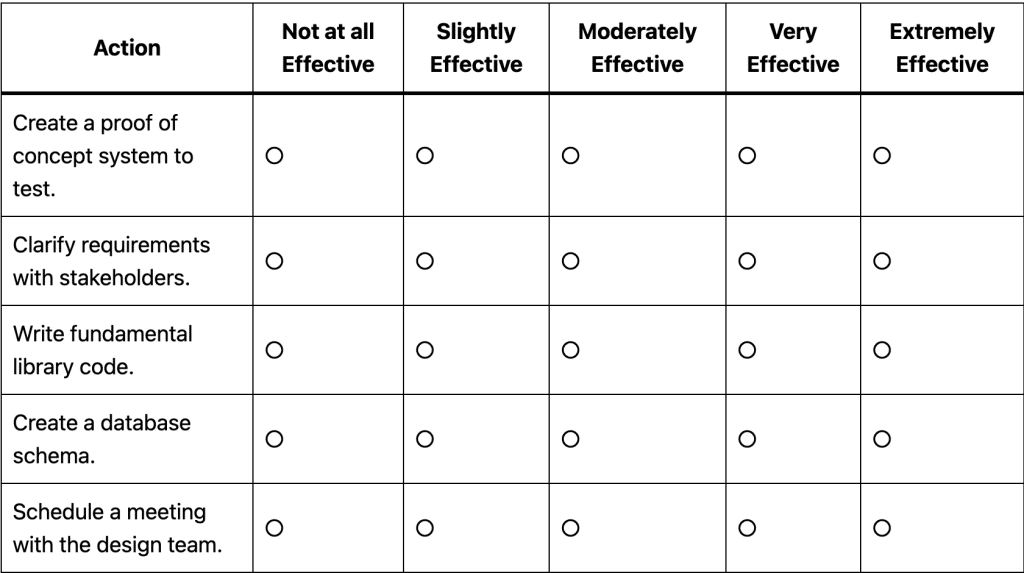
The Work Simulation places you inside a fictional Amazon-like company as a Product Manager. You receive a simulated inbox where emails arrive at intervals from colleagues, managers, and regional leads - and you must make decisions exactly as a real Amazon PM would. The key mechanics our insider flagged: two projects run simultaneously, with emails from each interleaving throughout the session. You are constantly context-switching. At the end of each project arc, there is a virtual meeting recording (roughly 2 minutes) you can only replay a limited number of times - then questions follow based on what was said in the meeting.
The interface uses a rating grid format: you see a list of possible actions or responses, and you rate each on a scale (usually "Not at all Effective" to "Extremely Effective"). Sometimes you rank options by priority. There's no single right answer to click - you're rating multiple options simultaneously.
Former Senior Leader and Bar Raiser Evgeny Bik of Day One Careers describes the assessment as comprising "5 parts called modules," each presenting "workplace situations that are typical of real-life work challenges." The key insight from his research: candidates who prepare with targeted coaching perform significantly better - it's a learnable test, not a raw talent filter.
A Senior PM candidate who passed described the experience on Blind: "It's like a full PM work simulation with multiple components like answering an email, getting another email with more context, and getting into a meeting - checking if you can multitask, switch context, and solve issues while keeping the leadership principles in mind."
How the Rating Grid Works
Most candidates are surprised by the format. Instead of "which of these is the best answer," you rate every option. This tests whether you understand why some actions are more effective than others - not just whether you can identify the top-line answer.
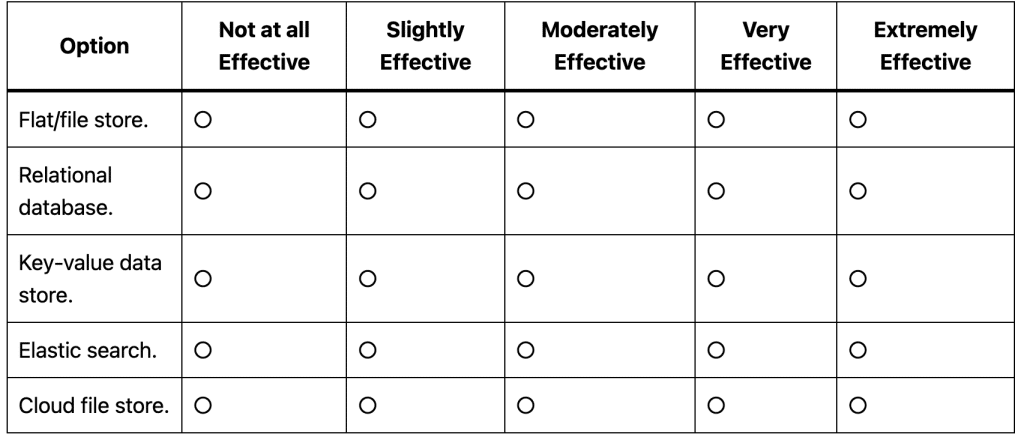
On the rating grid: getting the extremes right matters most. The scoring algorithm weights the ends of the scale - correctly identifying the "Extremely Effective" and "Not at all Effective" actions will score higher than perfectly ordering the middle tier. Focus your judgment on clearly identifying the best and worst options first, then place the others.
5 PM Work Simulation Scenarios with Answers
Every scenario tests 2–3 Leadership Principles simultaneously. The right answer must satisfy all of them. Here are five realistic scenarios with the LP logic behind the correct approach:
Scenario 1: The Feature Delay
Setup: Your product launch is in 2 weeks. An engineer messages saying a core feature will be delayed 3 weeks. You've already communicated the launch date to VP stakeholders.
Rate the effectiveness of each action (Not at all Effective → Extremely Effective):
ActionRatingWhy
Launch on time, descope the feature, communicate change proactivelyExtremely EffectiveBias for Action + Ownership + Earn Trust
Ask engineering for a revised estimate before decidingVery EffectiveAre Right, A Lot - confirm the data first
Push launch 3 weeks to align with engineeringModerately EffectiveAcceptable but not optimal - slows customer value delivery
Ask the engineer to work overtime to hit the dateSlightly EffectiveStrive to be Earth's Best Employer - don't impose unreasonable pressure
Escalate to VP immediately and ask them to decideNot at all EffectiveFails Ownership - this decision is yours to make
Key insight: Amazon penalizes candidates who push decisions upward that they should own. Escalating to the VP for a call that's within your scope is the clearest possible failure of the Ownership LP.
"It's not a team interview, rather YOUR interview. The interviewer wants to understand what you influenced and did. End every answer with a number and a loopback insight."
- Yash Chaturvedi, 15-year Product Executive (AI/Advertising/Commerce)
Scenario 2: Competing Stakeholder Priorities
Setup: Your roadmap is set for Q2. Your sales team's VP sends an urgent request to reprioritize because a key enterprise client is threatening to churn unless a specific feature ships in 30 days. The feature wasn't on your roadmap. Engineering says 6 weeks minimum.
Rate the effectiveness of each action:
ActionRatingWhy
Schedule a data review with sales to understand actual churn risk, then assess trade-offsExtremely EffectiveAre Right, A Lot + Dive Deep - get the facts before committing
Propose a partial feature delivery (MVP) in 30 days as a bridgeVery EffectiveThink Big + Bias for Action + Customer Obsession
Descope other roadmap items to create room for this featureModerately EffectiveValid trade-off but skips the data step
Explain the roadmap prioritization process and decline the requestSlightly EffectiveProcess-oriented response that ignores customer risk signal
Immediately commit to the client's 30-day timelineNot at all EffectiveEngineering says 6 weeks - you'd be committing to something impossible
Scenario 3: Customer Complaint Escalation
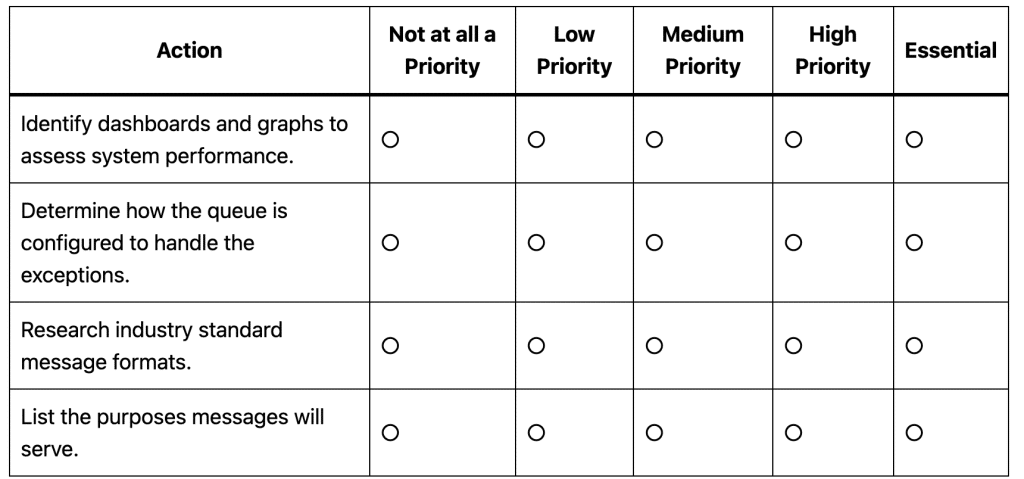
Setup: A large B2B customer sends a formal complaint to your CEO about a product bug that's causing data loss on their end. The CEO forwards it to you with "please handle." You have limited context - you don't know when it started, how many customers are affected, or whether engineering is aware.
Options rated:
Best answer: Contact engineering to understand scope, then respond to CEO with facts. Dive Deep + Earn Trust. You don't promise anything you can't back up. Getting the facts first shows rigor. Responding to the CEO before understanding the issue shows poor judgment.
Worst answer: Ask your manager how to handle it. Ownership. This is your responsibility - escalating a customer escalation further up the chain is exactly the opposite of what Amazon expects from a PM.
Practice scenarios like these with Careerflow AI Interview Practice - you can run through LP-aligned judgment questions and get instant feedback on your reasoning.
Scenario 4: The Data Contradiction
Setup: You're two weeks into a 6-week feature build. New usage data comes in showing customers aren't using the functionality this feature is built on top of. The data suggests the core assumption behind your roadmap item may be wrong.
Options rated:
Best answer: Customer research call to validate or invalidate. Are Right, A Lot + Learn and Be Curious + Customer Obsession. Two weeks of data isn't necessarily conclusive. Before stopping or pivoting, you gather more signal. This shows nuanced judgment, not just "data says stop so I stop."
"Prepare! I've had a surprising number of people bomb the interview, who clearly did zero research or preparation."
- Dave Anderson, Former Amazon Director & Bar Raiser, who facilitated hundreds of interviews for corporate roles
Scenario 5: Cross-Team Conflict
Setup: You and the PM for another team are both trying to claim engineering resources for Q3. Your project has a hard external deadline (regulatory compliance). Theirs is a revenue feature with a flexible timeline. Your manager is unavailable this week. The engineering team is asking you both to decide how to split resources.
Options rated:
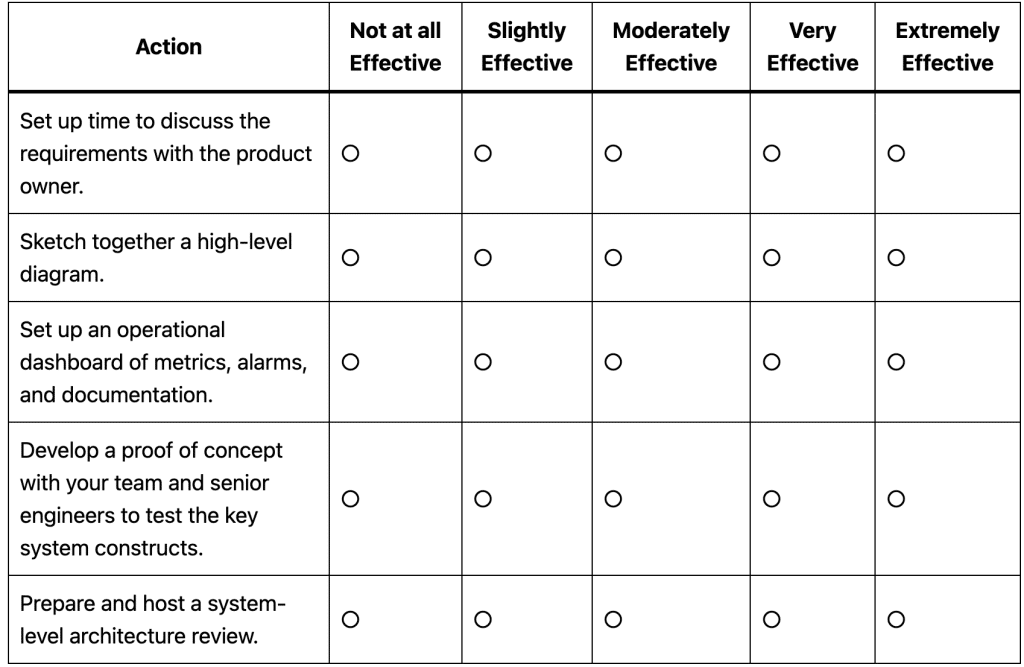
Best answer: Meet with the other PM and propose a mutually acceptable split. Earn Trust + Have Backbone + Ownership. You don't wait, you don't escalate unnecessarily, and you don't unilaterally claim everything. Bringing data (your regulatory deadline) to the conversation while hearing out the other PM is textbook Amazon collaboration.
Strong second: Regulatory first, then share. Bias for Action + Deliver Results. If you can't reach agreement, this structured priority proposal is a defensible Ownership move.
Real Work Simulation Scenarios: Insider Account (March 2026)
We recently connected with an anonymous Amazon PM candidate who completed the OA in early 2026. They shared a detailed first-hand account of exactly what the Work Simulation looked like - including the specific scenarios, the meeting recordings, and what questions followed. Here is their account, lightly edited for clarity and published with their permission.
"The interface is like an inbox. Every few minutes you keep getting emails from your colleagues and your boss. Every email has some detail related to a project - some highlight blockers, some include data, and some ask how you would rate the effectiveness of a particular action on a rating grid from least effective to most effective."
- Anonymous Amazon PM OA candidate, March 2026
One of the most important things this candidate flagged: the two simulations run in parallel, not sequentially.
"There were two main work simulations running simultaneously - two different projects. Although they were interleaved, one email from one project would come, then another email from the second project. You are constantly switching context."
- Anonymous Amazon PM OA candidate, March 2026
Real Scenario A: Global Expansion Rollout
Setup: You implemented a project successfully in North America and it showed early signs of success. Your boss emails asking you to roll it out across four new geographies: Asia, India, Europe, and South America. You need to coordinate with regional leads and deliver timelines and completion dates.
What unfolds: Each regional lead responds with their own blockers:
For each concern, you are asked to rate the effectiveness of several possible responses. Then comes the most memorable part of this scenario:
"There were some virtual meetings where recordings of about two minutes were played, with someone from each region speaking. It was like an alignment meeting. At the end of that recording, you could only listen to it two times."
- Anonymous Amazon PM OA candidate, March 2026
After the meeting, questions ask: how much cost or project value was saved, what constraints remain across the geographies, and what are your immediate next actions.
LP lens: This scenario tests Have Backbone; Disagree and Commit (do you engage with pushback or fold?), Ownership (do you manage the blockers yourself or escalate?), Customer Obsession (do you still push for expansion that serves customers despite friction?), and Earn Trust (how you communicate with your boss and regional leads under pressure).
Real Scenario B: Internal Product Adoption Tracking
Setup: Amazon has internally launched a product across several teams. Your role is to track adoption and deliver monthly updates. The opening email sets the entire context for what follows:
"The most important thing from the first email was that the monthly meeting will have leadership invited. So you have to highlight three things throughout everything you do: you have to highlight the success, you have to highlight the risk, and you have to recommend suggestions on how you can reach the target adoption number. That context drives every answer in this simulation."
- Anonymous Amazon PM OA candidate, March 2026
You review adoption data by department - some teams are ahead of target, some are behind, and some have data gaps:
"There were cases where Team Five's data was not available for certain months. The question was: in the monthly meeting, do you provide an update for Team Five or not? The answer is yes - you flag it transparently."
- Anonymous Amazon PM OA candidate, March 2026
The scenario ends with a virtual meeting recording (again, limited replays) where team leaders explain their actual adoption behavior. The most telling moment:
"Team Five's lead said: 'The way you measure adoption, you only need to use the feature once a month for it to count. So we just do that one time and we don't use the rest of the features.' That was a key insight you had to factor into your recommendations."
- Anonymous Amazon PM OA candidate, March 2026
Final questions: given everything you now know about adoption behaviors, blockers, and missing data - what are the most effective next steps?
LP lens: This scenario tests Dive Deep (go beyond surface adoption numbers - understand why), Deliver Results (how do you actually move the adoption needle?), Earn Trust (transparent reporting even when data is missing or unflattering), and Think Big (recommendations that address root causes, not just status updates).
The candidate noted the overall experience closely resembled this YouTube walkthrough of the Amazon Work Simulation - same interface and rating grid mechanics. Note: that video shows SDE-role technical scenarios (database design, message queues). The PM version uses the same format but with business and management scenarios, as described above.
Key takeaway: The parallel structure is deliberate. Amazon is testing whether you can manage two workstreams simultaneously without losing the thread on either one - and whether you carry the context from one email into the next even as the subject switches.
What Correct Work Simulation Answers Have in Common
Across all scenarios, the highest-scoring answers share a consistent pattern:
Resources to Prepare Specifically for the Work Simulation
How Amazon Grades the OA: The Green / Yellow / Red System
This is one of the least-documented aspects of the process - but insiders have confirmed it exists. Amazon uses a tiered scoring system, often described as a traffic-light model:
The threshold for 🟢 green varies by level - an L6 Senior PM bar is meaningfully higher than an L5 entry-level PM. The Work Simulation module carries the highest weight. Candidates who score 🔴 red on Work Simulation almost never advance regardless of other scores. Aim for 🟢 green, not just passing.
"Interview at Amazon isn't just about qualifications; it's also about storytelling. A story that is metric-backed, leadership-principle aligned and in STAR format."
- Yash Chaturvedi, 15-year Product Executive (AI/Advertising/Commerce)
The 16 Amazon Leadership Principles for PMs
Every question in the OA maps to one or more of Amazon's 16 LPs. Learn them directly from the Amazon official Leadership Principles page. Here's how each one shows up in PM scenarios:
Most common LPs tested in PM OA scenarios: Customer Obsession (#1), Ownership (#2), Bias for Action (#9), Earn Trust (#11), Have Backbone (#13), and Deliver Results (#14). These show up in virtually every module.
"Leadership Principles form the foundation of every hiring decision at Amazon. Candidates should focus on 'I' instead of 'we' when describing achievements - interviewers want to understand your individual contribution, not the team's."
- Brittany Bunch, Marketing Manager, Employer Brand at Amazon
Behavioral Questions: STAR Method
The behavioral section asks you to write STAR-format responses to prompts like: "Describe a difficult decision made with limited data." or "A time you disagreed with your manager." These are the same questions you'd get in a live loop - the OA version just gives you time to write rather than speak.
Format: Situation (1–2 sentences) + Task (your specific responsibility) + Action (what YOU did, not we) + Result (quantified).
Prepare 8–10 stories covering: difficult decision with incomplete data, disagreeing with a stakeholder, putting customer first vs internal pressure, taking ownership outside your scope, simplifying a complex product/process, delivering results under constraints.
What separates strong answers:
RELATED: How to Use the STAR Method on Your Resume
The fastest way to improve your STAR answers before the OA is to practice out loud or in writing with feedback. Careerflow AI Interview Practice gives you LP-mapped scoring on every behavioral answer - so you know which principles you're demonstrating and which are missing.
"Everyone talks about STAR (Situation, Task, Action, Result). But very few get it right. Most candidates get cut here. If your S/T is too generic, you lose credibility."
Cognitive Reasoning
Don't underestimate this section. It's medium-weighted but can tip a borderline 🟡 yellow toward 🔴 red if you underperform. Types:
Strategy: Max 60–90 seconds per question. Do a full timed practice set on JobTestPrep before the real assessment to calibrate your pace.
5-Day Study Plan
Day 1: Read all 16 LPs on the Amazon website. Write a one-sentence definition for each. Identify 1-2 personal examples per LP.
Day 2: Write 8-10 STAR stories using the STAR method framework. Map each to 2–3 LPs. Target 150–200 words per story. Practice with Careerflow AI mock interview and review the LP feedback.
Day 3: Do 20–30 Work Simulation practice scenarios on JobTestPrep. For each scenario, identify which LP is being tested before selecting your rating.
Day 4: Complete 1–2 timed numerical and verbal reasoning practice sets. Focus on accuracy at pace, not just correctness.
Day 5: Full mock run - quiet room, no phone, one uninterrupted sitting. Simulate the real test conditions. Review what you got wrong and trace back to the LP logic. If you want to go further, the GoogIe Product Manager Interview guide covers everything that comes after the OA.
Common Mistakes That Screen Candidates Out
RELATED: How to Prepare for a Job Interview
OA vs. Live Interview Comparison
Online AssessmentLive Interview Loop
FormatAsync, self-pacedSynchronous with interviewers
DepthSurface-level LP fitDeep behavioral dives
Follow-upsNoneInterviewer can probe
LP coverageAll 16 broadly2–3 per interviewer
Duration1.5–2.5 hours total45–60 min per interviewer
ScoringAlgorithmic 🟢/🟡/🔴Human debrief consensus
What Happens After the OA
🔴 No pass: automated rejection. Typically wait 6–12 months before reapplying.
If you advance: recruiter screen → hiring manager screen → virtual on-site (4–6 interviews) → offer calibration. The OA is just the gate - the live loop is where detailed LP stories matter.
RELATED: Amazon Behavioral Interview Questions: Complete Guide
Best Resources to Prepare
Free: Amazon official LP page (start here), Reddit r/ProductManagement (search "Amazon OA" and "Amazon work simulation" for recent candidate experiences), Interview Query PM Guide.
Paid: JobTestPrep (most comprehensive Amazon OA practice packs), Exponent (PM mock scenarios and LP-aligned coaching), McConsultingPrep.
YouTube: Jeff H Sipe (former Amazon recruiter), Amazon Leadership Principles deep dives.
RELATED: Mock Interview Practice: Your Complete Guide to Interview Confidence
Start Your Amazon PM Prep Today
The Amazon PM OA is hard not because it's technically difficult - but because it requires you to think in Amazon's language, not your own. Candidates who pass learn the 16 LPs cold, build real STAR stories, and get reps on scenario judgment before the real thing.
Start your prep with Careerflow AI Interview Practice → Real-time LP-mapped feedback on behavioral answers, scenario judgment practice, and STAR story coaching - everything you need to walk into the Amazon OA with confidence.
Last updated: March 2026. Guide reflects candidate-reported experiences from 2024–2026.
.webp)

%20Which%20Should%20You%20Use.webp)
