


.avif)
.webp)
Most employees sign their first severance offer without asking a single question. This common mistake often leads to missed financial opportunities and lost benefits. Severance is rarely a fixed or final benefit; it tends to be an opening offer, and most employers expect you to negotiate it.
Knowing what to ask for and when to push back directly improves your financial stability during a career transition. This blog outlines the standard components of a package, identifies negotiable terms, and provides a framework for making a counteroffer. Use these strategies to protect your interests before you sign anything.
If you have been laid off recently, check our guide on 👉 Amazon Layoffs 2026: What to Do If You're Affected
❌ Disclaimer: This post provides general advice for informational purposes. Consult a legal professional regarding your specific circumstances before negotiating or signing any binding legal paperwork.
What is severance?
Severance is compensation an employer provides when your job ends, typically due to layoffs, restructuring or role elimination.
It usually includes:
- A payout based on your salary and tenure
- Continued benefits for a limited time
- Sometimes extras like bonuses, equity treatment or job search support
It’s meant to ease the transition while you find your next role.
What a severance package typically includes
Severance pay is the most visible component of a separation agreement, calculated based on your years of service. According to the Society for Human Resource Management, the most common formula is one to two weeks of base salary per year worked, though this varies by role, level, and industry. Note that this assumes an entry to mid-level role. Senior roles like C-Suite positions often take a different approach.
Beyond base pay, a standard offer often includes several critical benefits:
- Health Insurance: Continued coverage or COBRA premiums paid through a specific date.
- Equity & Bonuses: Accelerated vesting of stock options or pro-rated performance bonuses.
- Transition Support: Outplacement services and agreed-upon reference letters.
- Final Expenses: Reimbursement for outstanding business costs or unused vacation time.
Many employees receive a "bare-minimum" offer. Some packages only cover base pay and COBRA details.
That doesn’t mean the rest is off the table. It means it hasn’t been negotiated yet.
Can you actually negotiate severance?
Yes. In most cases, severance is negotiable. It’s a legal agreement, not a fixed benefit. Employers have flexibility in what they offer and often expect reasonable negotiation.
Your leverage comes from the agreement itself. By signing, you typically waive your right to bring legal claims against the company. That waiver has real value. Use your review window to assess the full offer and prepare a professional counter.
Legal Consideration: The Older Workers Benefit Protection Act (OWBPA) requires employers to give workers aged 40 and older at least 21 days to consider an agreement. You also have 7 days to revoke your signature after signing.
What you can negotiate beyond base pay
Base pay is only one part of a severance package. Several other elements are often flexible, even if they’re not included in the initial offer.
Raising these points is standard practice. When handled professionally, it won’t damage the relationship.
Extended pay or lump sum
If your offer is based on two weeks per year of service, ask for more.
A reasonable counter is three weeks per year, especially if you have a strong tenure or hold a senior role. You can also negotiate for a lump sum payment instead of periodic salary continuation if you prefer a clean break and immediate cash.
Health insurance continuation
COBRA allows you to keep your health coverage, but you pay the full premium. That cost is often much higher than what you paid as an employee. Negotiating for the company to cover the employer portion of your COBRA premiums for 30 to 90 days is a common and frequently granted request.
Equity vesting acceleration
If you are approaching a vesting cliff or hold unvested stock options, request accelerated vesting as part of your separation. This is particularly relevant in tech and startup environments where equity represents a substantial portion of your total compensation. Securing even a partial acceleration significantly improves your long-term financial position.
Outplacement services
Career transition services, like resume coaching and job placement assistance, are high-value additions. If outplacement services aren't in the initial offer, ask for them directly or negotiate a cash equivalent to fund your own career coaching. This ensures you have expert support during your job search.
Non-disparagement and reference terms
Ensure that any non-disparagement clause is mutual. This protects your professional reputation by preventing the company from making negative statements about you, just as you agree not to disparage them. Specify who is authorized to provide a reference and confirm what they will say.
Extended laptop or equipment access
Requesting a short extension on laptop or equipment access is a low-stakes ask that companies frequently accommodate. This gives you time to retrieve personal files or finalize portfolio samples. Just ensure you stay compliant with the company's intellectual property policies.

How to negotiate a severance package: step-by-step
Negotiating a severance package can feel intimidating, but a structured approach makes it manageable and effective. Here’s a detailed roadmap:
✅ Step 1: Don’t sign immediately
You don't have to sign the day of the layoff meeting. You have the right and the duty to take the time to read the agreement.
- 40+ age employees: Up to 21 days to review under the Older Workers Benefit Protection Act.
- Others: 48–72 hours is a reasonable window.
Use this time to fully understand the offer and prepare any counter requests. Signing too quickly can limit your negotiating power and leave benefits on the table.
✅ Step 2: Review the full agreement carefully
Severance is more than just pay. Read every clause closely:
- Non-disparagement terms: Are they mutual or one-sided?
- Non-compete clauses: Could they restrict your next job?
- Scope of the release: What legal claims are you waiving?
- Clawback provisions: Could any future payment be reversed?
If the agreement is complex or your stakes are high, consider a brief consultation with an employment attorney. Many offer flat-fee severance reviews that can save you thousands in missed benefits.
✅ Step 3: Know your leverage
Your negotiating power comes from several factors:
- The company’s interest in a clean release without legal challenges
- Your tenure and contributions
- The potential cost and disruption of disputes
- Market norms for severance in your role and industry
Don’t make vague requests like “I want more.” Be specific and reasonable. The clearer your counteroffer, the easier it is for the company to approve.
✅ Step 4: Make your counteroffer in writing
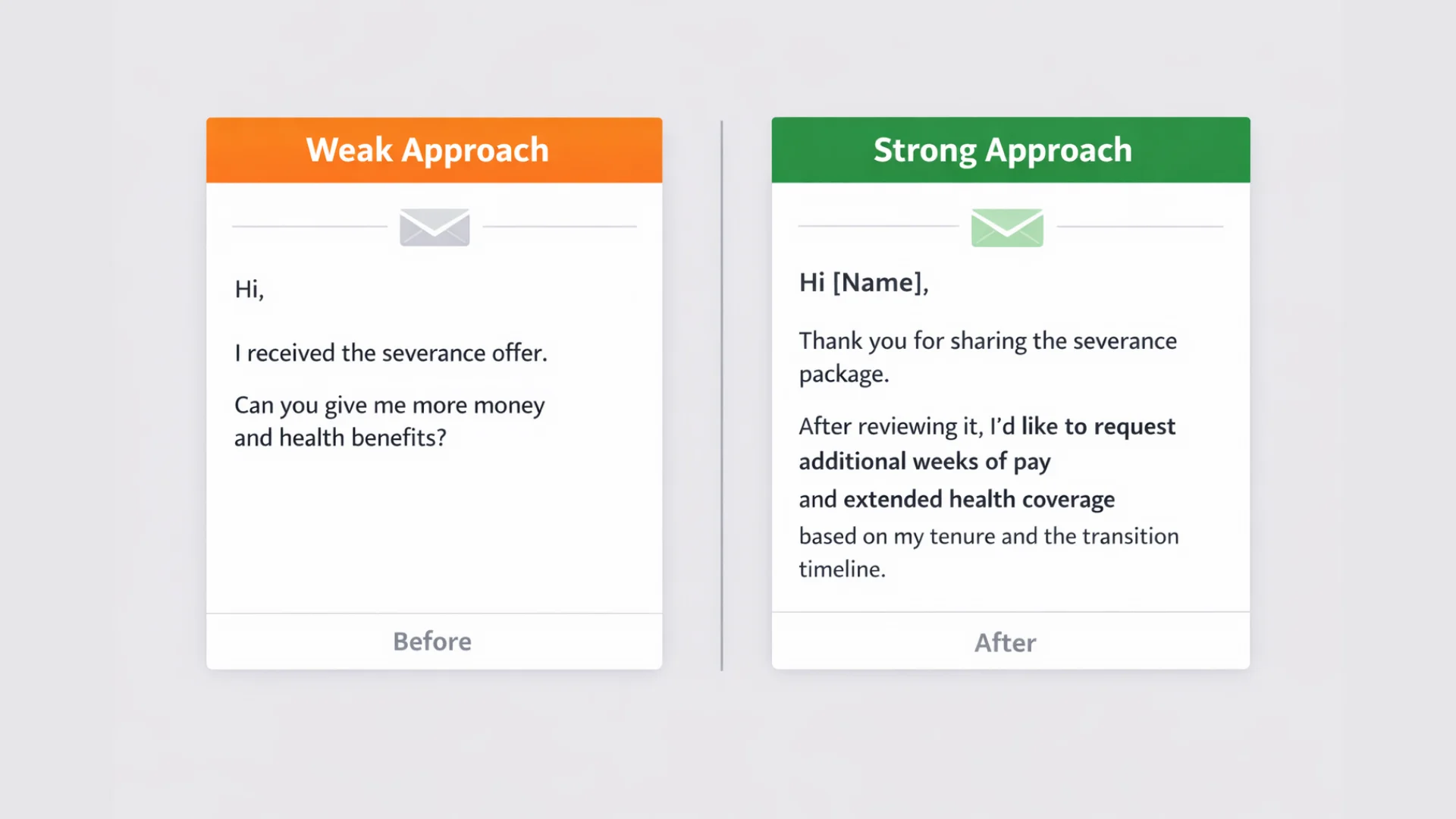
An email is typically sufficient and keeps a clear record. Keep it professional and concise:
- Be professional and concise: Thank them for the offer, note that you’ve reviewed it, and list your requests clearly.
- Frame your requests positively: Focus on your situation and contributions rather than blaming or threatening.
Example:
“Given my seven years with the company and the planned transition timeline, I would like to request an extension of health coverage for 60 days and acceleration of my upcoming equity vesting milestone.”
This approach is factual, collaborative, and hard to refuse.
✅ Step 5: Get the final agreement in writing
Any verbal commitments made during negotiation aren't enforceable unless included in the signed document.
- Ensure all adjustments, extended pay, benefits, references and equity are documented.
- Confirm the final agreement before returning it to HR.
This protects you legally and ensures your negotiated terms are honored.
Following these steps allows you to negotiate confidently, maximize your benefits, and maintain professionalism throughout a difficult transition.
Red flags to watch for before you sign a severance agreement
Before putting pen to paper, carefully review the document for clauses that could limit your future opportunities or reduce your rights. Here are common red flags to watch for and why they matter:
❌ Overly broad non-compete clauses
Some agreements include restrictions preventing you from working in your industry for 12–24 months.
- Why it matters: Such clauses can severely limit your next job opportunities.
- What to do: Ask for clarification, negotiate a narrower scope, or consult an employment attorney.
- State considerations: Non-competes are unenforceable in some states, but you should confirm local law before signing.
❌ One-sided non-disparagement
A non-disparagement clause may prevent you from speaking negatively about the company but not restrict the company from saying the same about you.
- Why it matters: This could leave your reputation vulnerable.
- What to do: Request a mutual clause that protects both parties equally.
❌ Vague release language
Some agreements use phrases like “release of any and all claims.”
- Why it matters: You may be giving up more than you realize, including potential discrimination, wage, or other legal claims.
- What to do: Ask for clarification on what is included and consider legal review if language is unclear.
❌ No reference commitment
Many agreements are silent on references.
- Why it matters: Without clarity, you could face difficulty securing future employment.
- What to do: Include a clause specifying who will provide a reference and what will be confirmed at minimum: dates of employment, job title, and eligibility for rehire.
❌ Short deadline pressure
Some employers push for a same-day signature.
- Why it matters: Urgency benefits the company, not you, and can lead to overlooked clauses.
- What to do: Take the time you are legally entitled to, 48–72 hours, or up to 21 days if you are over 40.
How Careerflow helps while you are negotiating your severance
Negotiating a severance package can take several days or even longer. During this time, building your job search journey strengthens your position and gives you confidence, regardless of the outcome. Careerflow offers tools designed to keep you proactive, organized, and ready to move.
Resume Builder: Update before you start applying
Even if you aren’t ready to submit applications, updating your resume while you’re still employed ensures your achievements are fresh.
How it helps:
- Select an ATS-compatible template to ensure your resume passes automated filters.
- Import your current role and add measurable accomplishments, including metrics, project outcomes, or team impact.
- Run the AI optimizer against a target job description to identify keyword gaps and maximize discoverability.
- Save the updated resume so it’s ready to deploy immediately if an opportunity arises or your negotiations conclude.
This proactive step ensures you can respond quickly without scrambling under pressure.
Job Tracker: Monitor the market while you decide
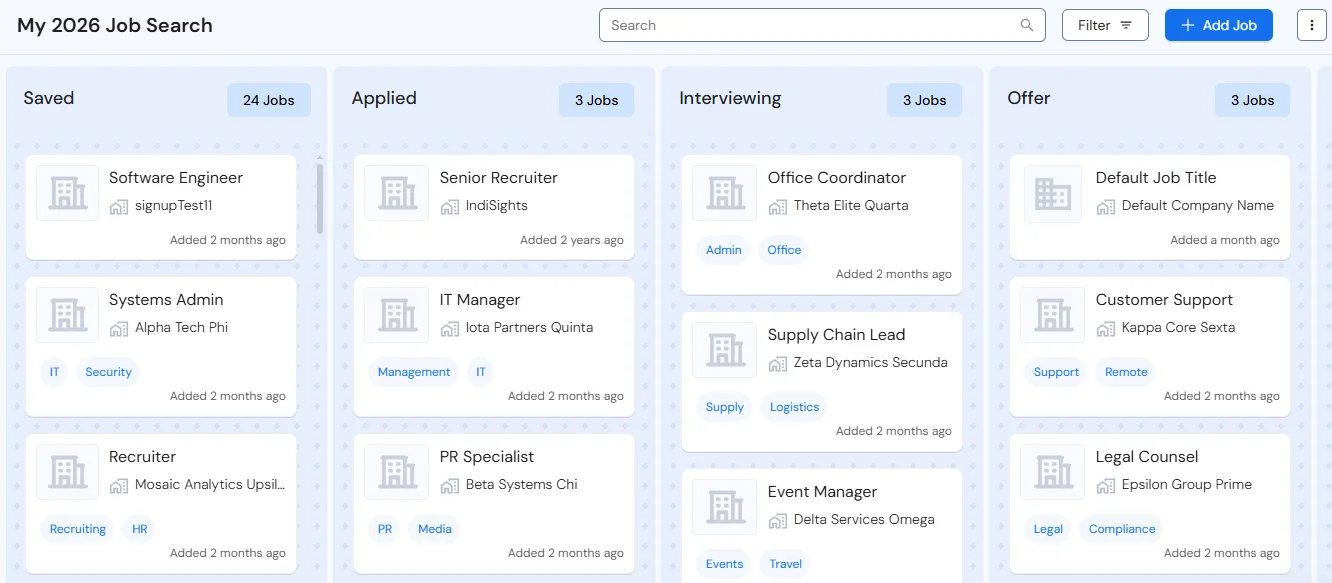
Understanding the market gives you leverage during negotiations. Our Job Tracker lets you track opportunities without committing prematurely.
How it works:
- Install the Careerflow Chrome Extension to save jobs from LinkedIn, Indeed, or any job board with a single click.
- Organize your pipeline using stages: Saved → Applied → Interviewing, keeping all open threads in view.
- Monitor roles to understand demand, salary ranges, and required skills, giving you insight into your alternatives.
By knowing what’s available, you negotiate from a position of strength. You can confidently weigh severance offers against real market options and make informed decisions about your next move.


.webp)

%20Which%20Should%20You%20Use.webp)
