


Career Advice
.avif)
.webp)
Even though Amazon expects to make $211 billion in sales and $21 billion in profit every quarter (New York Times), it has cut 30,000 corporate jobs since October 2025, including 16,000 in January 2026. That same week, UPS said it would cut 30,000 jobs because it was getting fewer packages from Amazon.
A layoff is purely a business choice, this has nothing to do with your value and skills. Software engineers, who are some of Amazon's best workers, were hit the hardest. LinkedIn Research says that almost 80% of workers don't feel ready for the job market in 2026. But if you take the right steps, you can turn this disruption into the job opportunity you've been waiting for.
This blog will tell you everything you need to know about getting your severance and benefits if you've been laid off from Amazon or are worried you might be next. It also tells you how to start a successful job search in a competitive market.
Amazon layoffs 2026: Timeline and latest updates
This section will be updated if more layoffs are announced throughout 2026.
January 2026: 16,000 corporate jobs eliminated
- Date announced: January 28, 2026
- Total impact: 16,000 corporate roles worldwide
- Hardest-hit teams: Software engineers, managers, recruiters, analysts
- Geographic impact: Roughly 2,200 jobs in Washington state and 1,500 in California, with additional cuts in the UK and India.
- Context: This comes after the layoffs of 14,000 workers in October 2025.
👉 Learn More: Amazon Layoffs 2025: How to Navigate Amazon’s Job Cuts and Plan Your Next Move
- Company statement: SVP Beth Galetti stated the cuts help "strengthen the organization by reducing layers, increasing ownership, and removing bureaucracy."
- Related news: Amazon is closing all 14 Amazon Go and 50+ Amazon Fresh stores to pivot toward Whole Foods and same-day delivery.
October 2025: 14,000 corporate jobs eliminated
- Jobs cut: 14,000 corporate positions
- Hardest-hit divisions: Recruiting, HR, corporate operations
- Context: CEO Andy Jassy noted that AI-driven efficiency would lead to a leaner corporate workforce over time.
What's driving Amazon's layoffs?
Amazon is currently managing a massive shift in how it spends money and organizes its teams. While the company is highly profitable, leadership is moving away from the "hiring spree" model of the early 2020s.
AI investment and capital reallocation
Amazon is spending over $125 billion annually on AI infrastructure and data centers. Laying off corporate staff allows the company to move capital into high-growth areas like generative AI and specialized cloud services.
Bureaucracy reduction
The company is aggressively "flattening" its internal structure. By removing middle management layers, Amazon aims to operate more like a startup, where individual contributors have more ownership and decisions happen faster.
Automation and robotics
Beyond the corporate office, Amazon plans to integrate 500,000+ robots into its fulfillment centers. The goal is to eventually automate tasks currently handled by hundreds of thousands of warehouse workers to lower long-term costs.
Why layoffs are happening (and why it’s not about you)
Companies are cutting jobs even while making record profits. Amazon announced its January 2026 layoffs the same week it expected to report $21 billion in quarterly profit. These cuts aren't about financial distress or a lack of money.
The official reasons are simple: reducing bureaucracy, removing management layers and freeing up cash for AI. Amazon spent $125 billion on data centers in 2025 alone. They are moving money from people to processors.
The real shift is that companies are restructuring around AI. They are trimming roles they believe can be automated or combined. CEO Andy Jassy told employees that AI will allow Amazon to "operate with fewer corporate workers" over time.
For you, this means a layoff is a strategic business decision, not a judgment of your work. Software engineers, some of the most skilled individuals in the company, suffered the most from layoffs at Amazon. In this market, experiencing layoffs does not reflect your talent or value.
The first 48 hours: Immediate priorities
The first two days after a layoff are about securing your foundation, not launching a job search. Resist the urge to immediately update LinkedIn or start applying. Protecting your advantages should come first, along with understanding your financial runway.
Review your severance package (don't sign immediately)
You typically have 21 days to review and sign a severance agreement. Use this time, and don't sign under pressure. Review the pay amount, timeline, health insurance, unused PTO, and stock option treatment.
The initial offer is often negotiable. Companies expect pushback, especially from senior employees. Common points to negotiate include:
- Additional severance weeks: Standard pay ranges from 1 to 4 weeks per year of service. If you are a high performer or have been there for years, ask for more.
- COBRA premiums: Request that the employer cover your full health insurance costs for at least 3–6 months.
- Accelerated vesting: Ask for "pro-rata" vesting of your next RSU or stock option cliff so you don't leave earned equity on the table.
- Outplacement services: Request access to career coaching or resume services.
- Equipment access: Ask to keep your laptop or other tech to assist in your job search.
If you suspect wrongful termination or are in a protected class, consult an employment attorney before signing anything.
Understand your health insurance options
Job loss triggers a 60-day Special Enrollment Period. You have several paths to stay covered:
- COBRA: This lets you keep your exact Amazon plan for up to 18 months. However, you pay the full premium. This can cost $2,000+ per month for families.
- Healthcare.gov Marketplace: This is often more affordable than COBRA. If your income drops significantly, you may qualify for subsidies that lower your monthly costs.
- Spouse’s plan: You can usually join a partner’s plan within 30 days of losing your coverage, even if it’s outside their open enrollment window.
- Medicaid: If your income drops to near-zero, you may qualify for state-funded insurance.
Don’t let your insurance lapse. Even a one-week gap can lead to massive medical costs if an emergency happens.
File for unemployment immediately
File for benefits as soon as your active employment ends, even if you received severance. Rules vary by state, but severance doesn't always disqualify you from receiving benefits.
Benefits are typically 40–50% of your previous salary, up to a state maximum. For example, Washington state usually offers higher caps than Florida or Texas. You will need your employment dates, your manager's contact info, and your bank details. Remember to document your search activities, as most states require proof to maintain your weekly payments.
Secure your finances and calculate your runway
Calculate your "financial runway" by adding your severance, unemployment, and savings. Then, divide that total by your essential monthly expenses.
- The 10-month rule: Every $10,000 of your previous salary typically requires one month of searching. If you earned $100,000, plan for at least a 10+ month search in the current 2026 market.
- Bare-bones budget: Cut all discretionary spending. Focus only on housing, food, utilities, and minimum debt payments.
- Contact creditors: If you anticipate trouble paying a mortgage or car loan, call the bank before you miss a payment. Many have hardship programs that can pause your payments temporarily.
Using specialized tools like Careerflow can help you shorten your search time by getting application-ready and have your name in front of recruiters faster.
Protect your 401(k)
Do not cash out your 401(k). A 10% early withdrawal penalty and standard income taxes will apply if you are under 55. This can wipe out nearly 40% of your savings instantly.
You have better options:
- Leave it: Keep the money with the former employer (if allowed).
- Roll it over: Move the funds into an IRA. This gives you more investment choices and keeps the money tax-deferred.
Negotiate vesting: If you are months away from vesting, ask for accelerated vesting as part of your severance negotiation.
Week one: Process and prepare
After securing your immediate finances, relax. A job search demands a significant amount of mental endurance. Launching in crisis mode often leads to burnout and poor decisions, so use this week to focus your efforts.
Give yourself permission to process
A layoff triggers real grief, even if you saw it coming. You might feel anger, relief, anxiety, or shame. These emotions are normal and research shows that people who acknowledge them find new jobs faster than those who try to push through.
Set a clear boundary for yourself. Give yourself three to seven days to simply process the change. During this time, focus only on the logistics, like severance and benefits. Do not start applications until you feel mentally steady.
Build your narrative
You will tell the story of this layoff dozens of times in interviews and networking calls. You need a narrative that is brief, factual, and forward-looking. Aim for something like this:
"Amazon eliminated 16,000 corporate roles in January as part of a restructuring. The restructuring affected my entire team. I’m now focused on [target role], where I can apply my experience in [skills]."
What to avoid in your story:
- Bitterness: Even if justified, it can make you seem difficult to work with.
- Over-explaining: You don't need to justify why you were chosen; it was a business decision.
- Apologizing: You didn't do anything wrong, so don't speak as if you did.
Practice saying this out loud until it feels natural. You want to move through the explanation quickly so you can pivot to the value you bring.
Audit your professional assets
Before updating your status to "Open to Work," please take a moment to assess your current assets. You need a clear picture of your starting point before you can move forward.
- Resume: When was it last updated? Make sure it highlights your most recent achievements at Amazon using specific metrics and data. Our resume builder includes tools that make this a quick and easy process.
- LinkedIn profile: Does your headline use keywords for the jobs you want next? Ensure your "About" section tells a cohesive story of your career path. Our LinkedIn Optimizer can help with this too!
- Work samples: Collect examples of your best work, such as portfolios or case studies. Ensure you have copies that don't violate your non-disclosure agreement.
- References: Identify three to five people who can vouch for your work. Reach out to them immediately to confirm they are willing to support your search.
- Network list: Map out who you know at your target companies. Identify if you have any connectors in your network who can introduce you to hiring managers. Our networking tracker helps here as well.
Weeks 2–4: Launch your job search
It's time to switch to active job search mode now. The most important thing is to build systems that last instead of running around like crazy. To do well in the 2026 market, you need to use both high-tech optimization and networking with people.
Optimize your LinkedIn profile
Recruiters use specific keywords to find talent. If your profile doesn't match their search terms, you remain invisible. Your goal is to make it as easy as possible for a recruiter to find and "vet" you in under 30 seconds.
- Headline: Don't just list your last title. Include your target role, two or three key skills, and your industry. For example: "Senior Product Manager | B2B SaaS | Growth & Retention Strategy."
- About section: Lead with the value you provide. Use keywords naturally and end with a clear statement of what you are looking for next.
- Open to Work: Enable this feature immediately. You can choose to show it only to recruiters if you prefer privacy. Data shows that verified members with this badge receive 60% more profile views.
- Stay active: Recruiters prioritize profiles that show recent activity. Post a weekly insight or project update and comment on at least five industry-related posts to keep your profile "warm."
👉 Check how you rank against recruiter search algorithms with our LinkedIn Optimizer.
Set up a job tracking system
The average job search involves 30 or more active applications. Trying to track these in your head or a messy spreadsheet will eventually lead to missed deadlines or forgotten follow-ups.
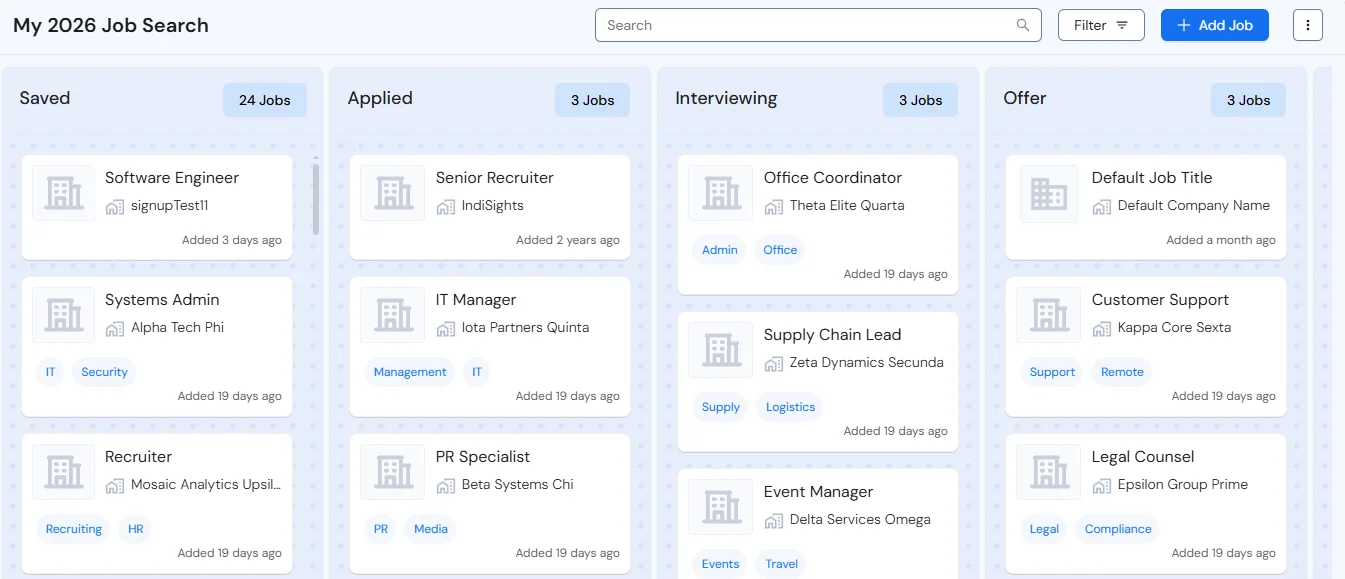
Use a dedicated job tracker like ours to centralize your search. This allows you to save jobs from any site with one click and move them through stages like "Researching," "Applied," and "Interviewing." Having a visual pipeline helps you see exactly where your search is stalled so you can adjust your strategy.
Tailor your resume for every application
Sending the same resume everywhere is the fastest way to get rejected. Applicant Tracking Systems (ATS) scan for specific keywords from the job description. If your resume doesn't match, a human will likely never see it.
For every role, you should:
- Paste the job description into a resume optimizer.
- Identify the missing keywords and core skills.
- Update your bullet points to include those terms naturally.
- Run an ATS compatibility check to ensure the formatting is readable.
This adds 20 minutes to your process but dramatically increases your response rate. Focus on quality over quantity.
Network strategically (not desperately)
Roughly 80% of jobs are filled through networking. However, there is a right way to reach out. You want to build relationships, not just ask for favors.
What to do:
- Reach out to former Amazon colleagues who have moved to other companies.
- Request informational interviews to learn about a company’s culture.
- Offer value by sharing relevant articles or making introductions for others.
What to avoid:
- Mass-messaging your entire contact list with "I'm looking for a job."
- Asking people you barely know for a referral immediately.
Aim for five outreach messages and two or three informational calls per week. You can manage these connections easily with a networking tracker.
Apply with intention
As per LinkedIn Economic Graph, job applications have more than doubled since 2022. Applying to every open role will only lead to "rejection fatigue." Be selective to keep your energy high.
Focus your efforts on roles where you meet at least 70% of the requirements. Priority should go to companies where you have a referral or to job postings that are less than two weeks old. A strong target is 5–10 high-quality, tailored applications per week rather than dozens of generic ones.
📢 Check out: 5 AI Job Search Tools You're Not Using (But Should Be In 2026!)
The long game: Staying resilient through a longer search
The current job market requires a marathon mindset. In 2026, searches that once took four months now often stretch to 12 or even 18 months, especially for tech professionals (Spokesman-Review). Preparing for a longer timeline now will help you maintain your mental and financial stamina.
Build routine and structure
Without a daily office routine, days can blur together and your motivation will naturally fade. Treat your job search like a job, but don't work 60 hours a week. Burnout is your biggest enemy.
- Morning block (2–3 hours): Focus on high-energy tasks. This is when you should tailor resumes, write cover letters, and prepare for interviews.
- Midday break: Get out of the house. Exercise, run errands, or handle personal tasks. Protecting your mental health is part of the work.
- Afternoon block (1–2 hours): Focus on "outward" tasks. Engage on LinkedIn, send follow-up emails, and participate in networking calls.
Invest in skill development
A longer search is the perfect time to fill skill gaps. Demonstrating initiative through learning can make you a much stronger candidate.
High-demand areas in 2026 include AI literacy, data visualization, and cybersecurity fundamentals. Even if you are in a non-technical role, understanding how to work with AI is a major competitive advantage. Use platforms like LinkedIn Learning, Coursera, or AWS Skill Builder to earn certifications that prove you are staying current with industry trends.
Protect your mental health
Job searching is emotionally draining because rejection is constant and progress is slow. You must actively defend your well-being.
- Stay connected: Resist the urge to isolate yourself. Join communities for laid-off workers on LinkedIn or local meetups. Talking to others in the same boat reminds you that this isn't personal.
- Set boundaries: Allocate "off" hours where you don't check email or job boards. Constant refreshing leads to unnecessary anxiety.
- Celebrate small wins: Getting a response or finishing a tough application is progress. Acknowledge those moments, not just the final job offer.
Consider alternative income
If your job search takes longer than you thought, getting temporary work can help you relax and fill in gaps on your resume.
- Consulting and freelance: Use your specific expertise for project-based work. This keeps your professional momentum high.
- Contract roles: Many companies hire contractors first. These roles often convert to full-time positions once you've proven your value.
- Gig and temp work: There is no shame in doing what you need to do to cover the bills.
- Human Data Tasks: You can also earn money from home by contributing to AI training. Check out Human Data opportunities as a flexible way to bridge the financial gap.
If you did any temporary work, list it on your resume as "Independent Consultant" to show that you stayed busy and productive during your transition.
How Careerflow helps you navigate a layoff
When you are dealing with a layoff, your biggest challenges are finding jobs and profile visibility. Careerflow serves as your personal career operations center, addressing both challenges.
Job Tracker
If you try to manage a lot of searches in your head, you'll miss out on chances. You can see every move you make on our Job Tracker's central dashboard.
- One-click saving: Use our browser extension to pull job details from 100+ sites like LinkedIn, Indeed, and Glassdoor instantly.
- Visual pipeline: Drag and drop applications through stages from "Researching" to "Offer." This gives you a clear view of where your search is working and where it’s stalling.
- Automated reminders: Never forget a follow-up. The system flags when it’s time to reach out to a recruiter or prep for an upcoming call.
- Contextual notes: Attach the specific version of the resume you used for a role, along with your networking notes, so you’re always prepared for a surprise screening call.
📢 Check out: How to Track Job Applications with Easy Steps and Tips
Resume Builder and Optimizer
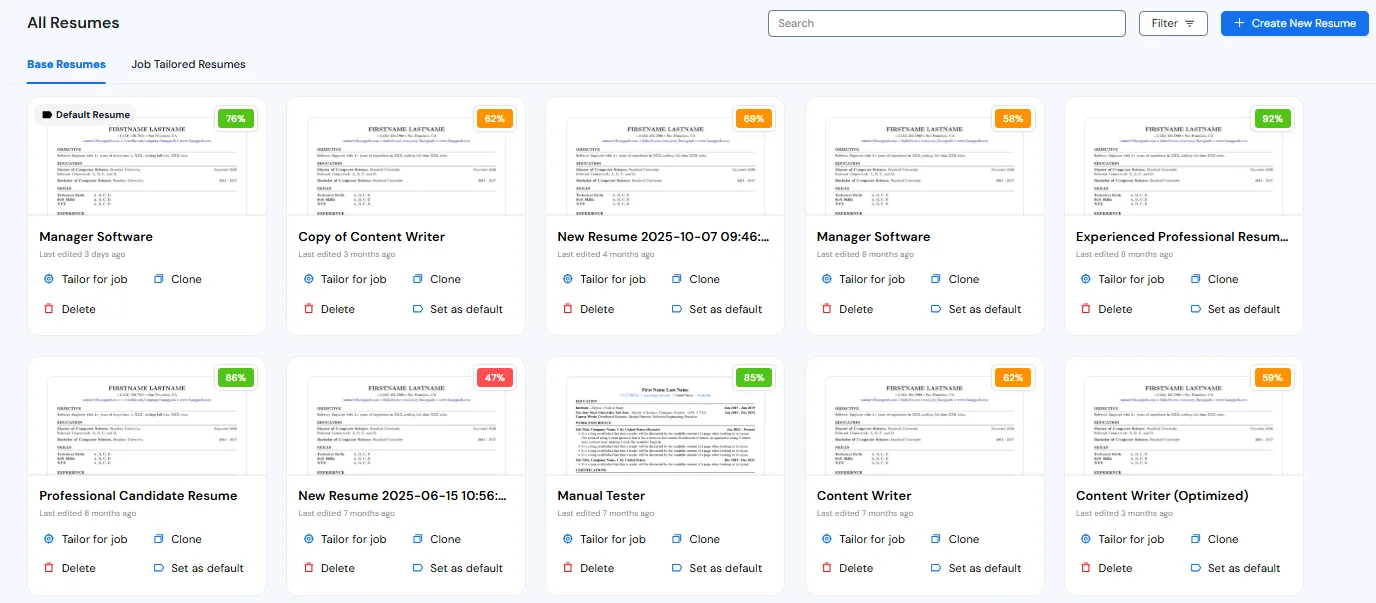
A layoff often means you are competing against thousands of other talented people. You need a resume that satisfies both the "ATS" and the human recruiter.
- ATS-compatible templates: We use layouts proven to parse correctly in systems like Workday and Greenhouse. No more getting rejected because a computer couldn't read your font.
- Keyword gap analysis: Paste a job description, and our Resume Optimizer will tell you exactly which skills or keywords are missing from your current draft.
- AI bullet point writer: Our AI bullet point writer helps you turn "Managed a team" into "Led a cross-functional team of 10 to deliver a $2M project 3 weeks ahead of schedule."
- Real-time match scoring: Get a 0–100 score that tells you how well your resume fits a specific role before you hit "Submit."
LinkedIn Optimizer
Most jobs in 2026 are found through recruiters searching LinkedIn. If your profile isn't optimized for their search filters, you become invisible.
- Profile scoring: Our LinkedIn Optimizer gives you an instant score based on how recruiters actually search for candidates in your field.
- Headline & Summary: Get a professional headline and summary that doesn't just list your past; it markets your future.
- Visibility boosters: We provide specific keyword recommendations for your "Skills" and "Experience" sections to help you rank higher in LinkedIn Recruiter search results.
📢 Check out: How to Optimize Your LinkedIn Profile for 40X More Opportunities
Mock Interview Tool
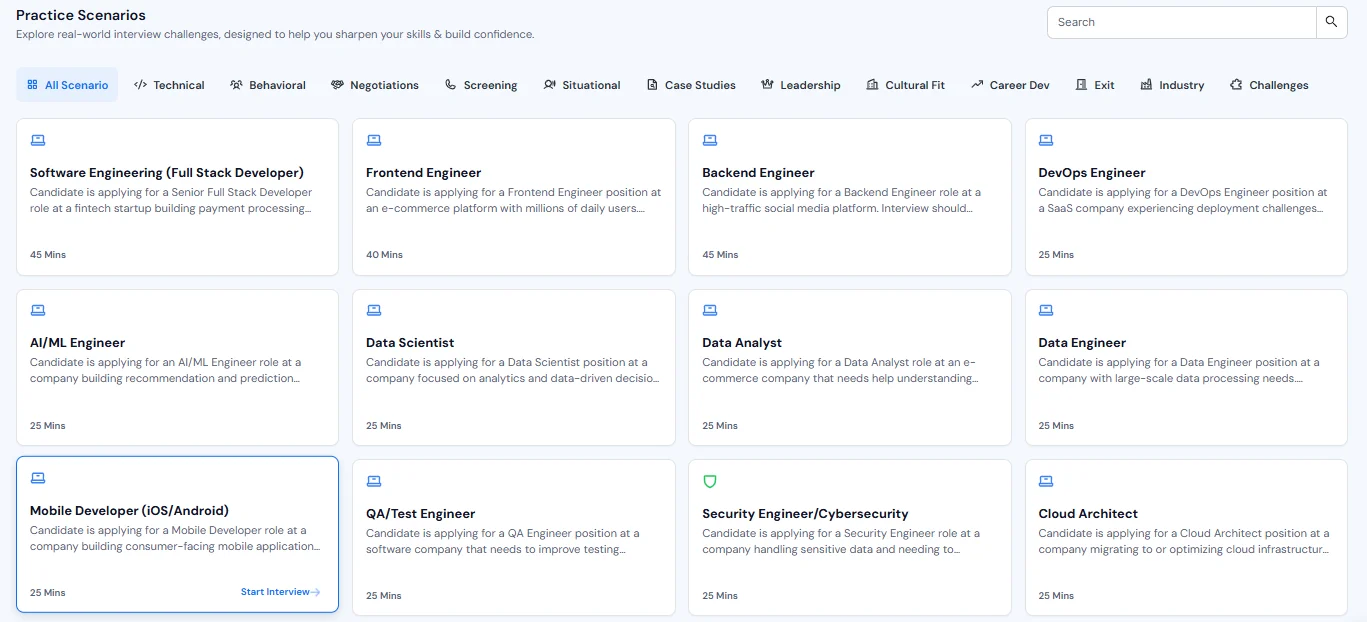
The interview holds significant importance. Our AI Mock Interview Tool allows you to practice in a safe environment so you can walk into the real room with total confidence.
- Role-specific practice: Receive realistic questions tailored to the exact company and role you are applying for.
- Instant feedback: The AI analyzes your answers for clarity, structure, and the use of the STAR method.
- Iterative improvement: Record your answers, review the feedback, and try again. This builds the "muscle memory" needed to handle even the toughest behavioral questions without breaking a sweat.

.webp)
