


.avif)
.webp)
Accepting a job offer requires confirming your terms in writing, establishing your start date and maintaining clear communication.
Always wait for a written offer letter before making your decision official. Verbal offers set initial expectations, but written details protect your compensation, title and benefits. Following up on a verbal agreement with written confirmation ensures you and your employer share the exact same expectations.
Whether you're ready to say yes immediately or need extra time, sending a clean email creates a smooth transition. This guide gives you actionable templates and practical steps to accept your offer with confidence.
Quick Answer: How to Accept a Job Offer
To accept a job offer, review the written terms, send your confirmation in writing and establish your official start date.
Receiving an offer is different from reviewing and formally accepting it. Take time to inspect your complete offer letter before giving your final confirmation.
Always use your employer's requested response method. If your recruiter asks for a portal submission, upload your signed contract there. If they prefer email, reply directly using clear acceptance language.
Follow these basic steps to finalize your acceptance:
- Evaluate terms: Confirm your salary, title, benefits and start date in writing.
- Send confirmation: Respond using your employer's preferred communication channel.
- Request next steps: Ask for written confirmation of your onboarding schedule.
Before You Accept, Review the Offer Details
Review every detail in writing before accepting a job offer. Receiving a verbal offer isn't the final step. Focus on three areas:
- Evaluating the organization: Research company stability, work culture and long-term business goals. Look into employee retention rates and recent company news. Consider whether company values match your personal workplace priorities.
- Reviewing the position: Confirm your daily responsibilities, job title and reporting structure. Ensure the role aligns with your career path and offers growth opportunities. Clarify performance expectations and your team's current goals.
- Assessing the compensation package: Examine your base salary, bonuses and equity options. Review health insurance coverage, retirement matching and paid time off. Calculate total financial value rather than focusing on base pay alone.
Always request a formal letter that outlines your title, pay and benefits. You need to confirm offer terms in writing before giving your final answer.
Check your proposed start date to avoid sudden gaps in pay or coverage. If you need coverage during your career transition, plan ahead for health insurance between jobs.
To Know More👉: Health Insurance Between Jobs: Your 5 Options After a Layoff
What to Confirm Before You Say Yes
Confirm all key employment details in writing before making your decision official. Don't rely on spoken promises alone.
Review these core elements in your formal offer letter:
- Job title and duties: Verify your exact position title, key responsibilities and direct supervisor.
- Compensation: Confirm your base salary, bonus eligibility, commission structure and payment schedule.
- Work location and schedule: Clarify whether your role is remote, hybrid or onsite. Confirm expected weekly hours.
- Benefits and PTO: Review health insurance coverage, retirement matching and annual paid time off.
- Start date: Ensure your starting date gives you enough time to resign and transition cleanly.
- Offer contingencies: Note any required background checks, drug screenings or reference checks.
Pre-acceptance checklist
Run through this quick checklist before signing your agreement:
☐ Written offer letter received and reviewed
☐ Salary and payment terms clearly stated
☐ Work location and remote expectations confirmed
☐ Start date agreed upon by both parties
☐ Contingencies identified and understood
How to Accept a Job Offer by Email
Send a clear, concise email that states your acceptance and confirms key details. Replying directly to your original offer email keeps the conversation thread organized for your recruiter.
Keep your subject line straightforward if you start a new thread. Use a clean format like "Job Offer Acceptance - [Your Name] - [Position Title]."
Structure your body text around four core elements: direct gratitude, explicit acceptance, start date confirmation and next-step questions. You can use our email writer to generate a tailored response instantly.
Focus on these essential sections when writing your message:
- Subject line: Make your intent obvious immediately.
- Formal acceptance: State your enthusiasm and explicitly say you accept the position.
- Terms summary: Restate your agreed start date, title and compensation.
- Onboarding request: Ask about required paperwork or next steps before your first day.
Basic email structure sample
Subject: Job Offer Acceptance - [Name] - [Role]
Dear [Hiring Manager Name],
I am thrilled to accept the offer for the [Role]. As discussed, I confirm my starting salary of [$] and my start date on [Date].
Please let me know what paperwork or onboarding steps I should complete before my first day.
Best regards,
[Name]
Job Offer Acceptance Email Templates
Use these customizable templates to accept your job offer professionally across common scenarios. Tailor each draft with your personal details before hitting send. Using clear acceptance language keeps your message concise and professional.
Standard job offer acceptance email
Use this template when you are ready to accept the offer as written.
Subject: Job Offer Acceptance - [Your Name] - [Job Title]
Dear [Hiring Manager Name],
I'm excited to accept the offer for the [Job Title] role at [Company Name]. Thank you for this opportunity.
As discussed, I confirm my starting salary of $[Amount] and my start date on [Date].
Please let me know if you need additional paperwork before my first day.
Best regards,
[Your Name]
Confirming after a phone call
Use this option to follow up in writing immediately after accepting an offer verbally over the phone.
Subject: Following Up - Job Offer Acceptance - [Your Name]
Dear [Hiring Manager Name],
Thank you for speaking with me today. As mentioned on our call, I'm thrilled to accept the [Job Title] position.
I confirm my agreed start date is [Date] with a starting salary of $[Amount].
I look forward to receiving the formal written agreement and joining the team.
Best regards,
[Your Name]
Accepting after negotiation
Use this template after agreeing on revised terms, such as a higher salary or updated start date.
Subject: Job Offer Acceptance - [Your Name] - [Job Title]
Dear [Hiring Manager Name],
Thank you for adjusting the offer terms. I'm happy to accept the position of [Job Title] with the updated salary of $[Amount].
I confirm my start date will be [Date].
Please send over the updated contract so I can sign and return it promptly.
Best regards,
[Your Name]
Acceptance with onboarding inquiry
Use this format when you need clear instructions on background checks, equipment setup or first-day logistics.
Subject: Job Offer Acceptance and Next Steps - [Your Name]
Dear [Hiring Manager Name],
I'm delighted to accept the offer for [Job Title] at [Company Name].
I confirm my start date on [Date] at $[Amount] base salary.
Could you please share the next steps for onboarding and my schedule for week one?
Best regards,
[Your Name]
What to Say If You Need More Time
Asking for an extension is normal. Employers usually grant a few extra days so you can evaluate terms.
Be honest and state a specific date when you'll give your answer. This keeps the hiring process moving smoothly. If you ultimately decide this position isn't a fit, learn how to decline a job offer politely.
Template for requesting an extension
Subject: Request for Extension - Job Offer - [Your Name]
Dear [Hiring Manager Name],
Thank you for offering me the [Job Title] role. I'm very excited about this opportunity.
Could I please have until [Date] to review the offer details? I want to ensure I make a well-informed decision.
Thank you for your understanding. I will follow up with you by [Date].
Best regards,
[Your Name]
When to Negotiate Before Accepting
Discuss your compensation and workplace terms before you formally sign your acceptance letter.
Once you say yes, you lose your leverage to request changes. Review your base pay, start date and remote work flexibility during initial discussions. Completing the negotiation before signing secures your preferred terms.
Prepare your counteroffer by researching market rates for your target role. Focus on total compensation including bonuses, equity and professional development funds.
If you haven't finalized your compensation strategy, read our guide on salary negotiation before signing your offer.
What to Do After Accepting the Offer
Complete your onboarding paperwork, notify other prospective employers and prepare your departure timeline after accepting your offer.
Contact other companies where you interviewed and withdraw your candidacy respectfully. Professional courtesy keeps those network relationships strong for future opportunities.
Don't announce your new role publicly until your contract is signed and background checks clear. Once official, revamp your profile using our LinkedIn optimizer to reflect your new title.
Disclaimer: This guide offers general career information and shouldn't be treated as formal legal advice regarding employment contracts.
How Careerflow Can Help You Stay Organized
Organize your job transition by updating your resume, tracking key dates and managing communication in one central dashboard.
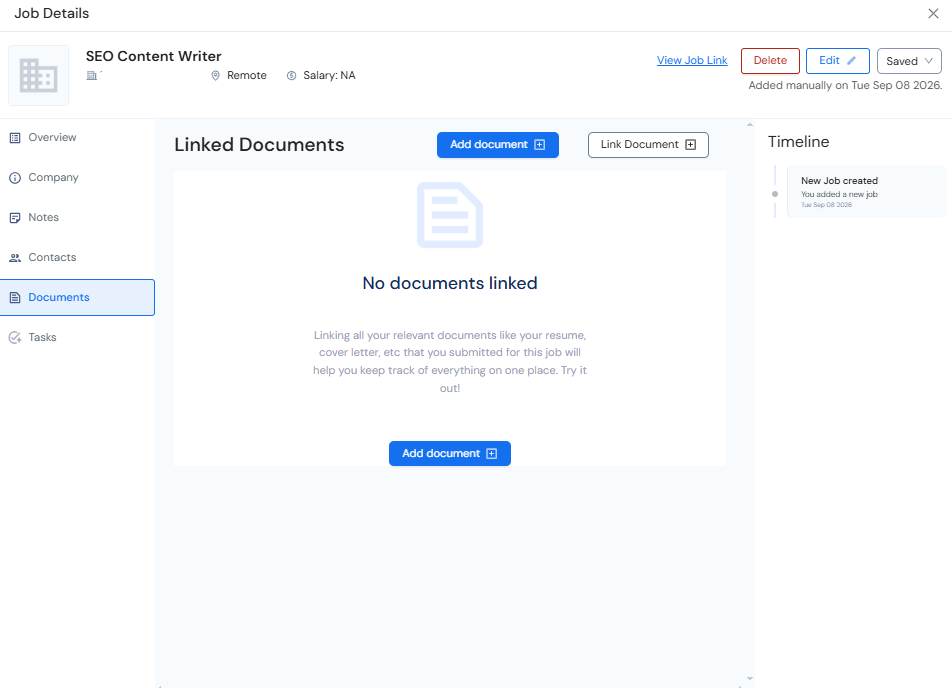
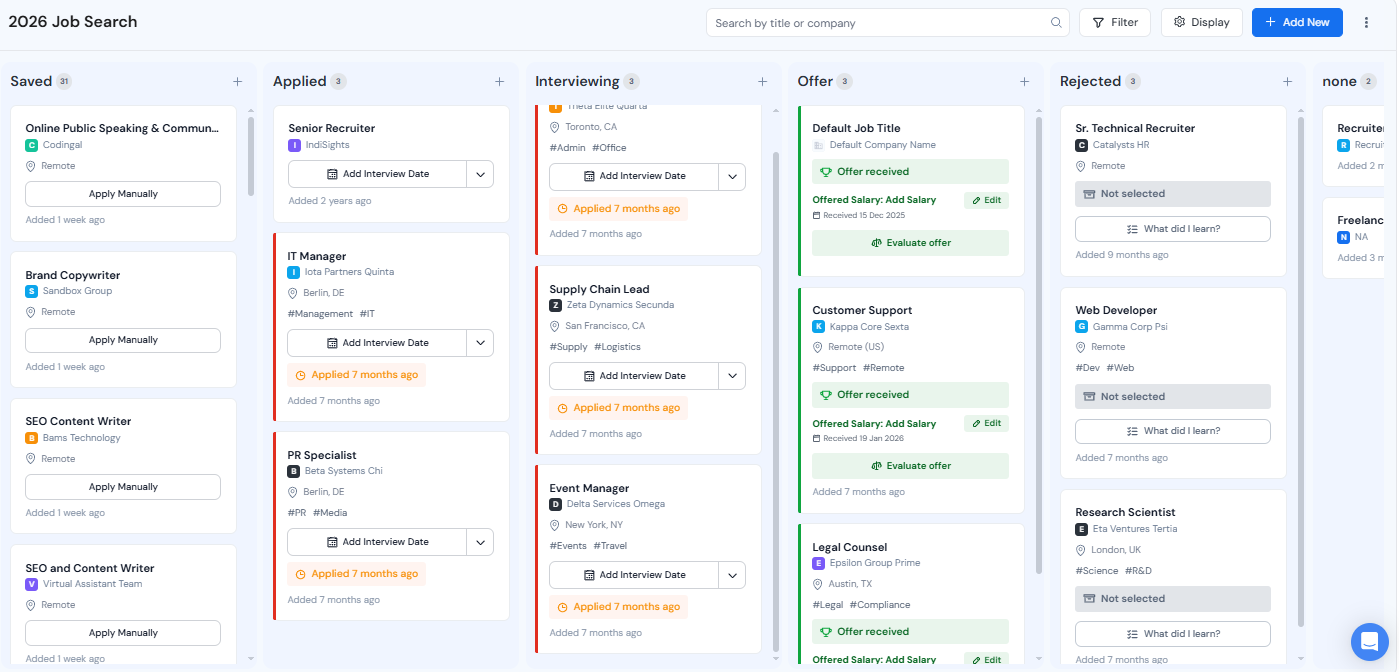
Use our job tracker to move your opportunity to the accepted column. Log your official start date, record salary details and store your offer letter securely.
Closing out other applications isn't complicated when your search stays organized. Mark outstanding interviews as closed so you can focus entirely on your onboarding process.

.webp)

%20Which%20Should%20You%20Use.webp)
