Interviews
.avif)
.webp)
Practicing mock interviews is the best way to reduce anxiety and perform better. You'll feel more prepared if you use the right questions and get honest feedback. This guide gives you a simple plan to practice whenever you're ready.
You'll learn how to build a focused question list and structure your answers using the STAR method. We'll also show you how to use the Careerflow Mock Interview tool to create real-life practice scenarios with AI-powered feedback. You'll get helpful templates and strategies you can start using today.
What is mock interview practice (and why it works)
Mock interview practice means acting out a real interview. You answer common questions out loud to find mistakes in your preparation before the actual meeting. This process helps you refine your stories so they sound natural and professional.
Why it works
This type of practice works because it helps you in several ways:
- Reduces stress: Repeated practice makes you feel less anxious about the real interview.
- Find mistakes: It shows you where your preparation is weak.
- Improves delivery: It helps you speak naturally, instead of sounding like you memorized a script.
- Builds skill: It helps you get used to structuring your answers correctly, even when you feel nervous.
Good practice isn't about memorizing every word. It's about feeling comfortable with your career stories and learning to think quickly. Even experienced professionals should practice before important interviews to ensure their examples fit the new role.
The 4-step mock interview practice system
This is a simple plan you can use every week or in the days before your interview. Follow these steps, and then repeat the cycle: Prepare → Practice → Review → Refine.
✅ Step 1: Build your targeted question bank
Don't just use general interview questions. Find questions that are specifically important for the job you want.
✅ Step 2: Prepare your STAR stories and talking points
The STAR method is the best way to structure your answers about past experiences. STAR stands for Situation, Task, Action, and Result.
✅ Step 3: Run your mock interview sessions
You can practice in three main ways:
📢 Note: Don’t pause for a long time to think. Don’t immediately try to answer the same question again. Practice the full interview flow, from your opening greeting to your closing questions.
✅ Step 4: Review, score, and iterate
After you practice, you must review your work to improve.
How to practice common interview question types
Different types of questions need different ways of answering. Here is how to prepare for the main categories:
Opening questions: Tell me about yourself and why this role
Structure for "Tell Me About Yourself": Keep your answer to 60 to 90 seconds.
- Present: Talk about your current job or what you're doing now.
- Past: Mention 1 to 2 jobs or experiences that are important for this new role.
- Future: Explain why you're interested in this specific opportunity.
For "Why this role/company": Link 1 to 2 specific things about the job or the company to your own skills, interests, or goals. Don’t just offer general praise; be specific about what makes you excited.
Practice tip: Record yourself answering these questions 5 times. Then, compare your first and last recordings to see how much clearer and more confident you sound.
Behavioral questions: The STAR method in action
These questions ask about your past experiences. Always use the STAR structure: Situation, Task, Action, Result.
Example STAR frameworks:
- "Tell me about a time you led a project": (S: We were launching a new feature. T: I was asked to lead the team. A: I created the plan, held weekly meetings, and solved a problem with the engineers. R: We finished 2 weeks early, and user interest went up by 15%.)
- "Describe a conflict with a coworker": Focus on how you solved the problem in a professional way.
- "Tell me about a failure": Focus on what you learned from the mistake and how you used that lesson later.
Practice rules:
- Keep your stories to 90 seconds.
- Use "I" instead of "we" to make it clear what you did.
- Include at least one number or clear result.
- Practice changing which details you focus on, depending on exactly what the question asks.
Technical and role-specific questions
These questions are very different depending on your job (like coding tests for engineers or case studies for consultants).
- Practice your process: Practice explaining your process out loud. Interviewers want to see how you reach a solution, not just the final result.
- Use frameworks: Use simple steps related to your field. For example, product managers should discuss user problems, key metrics, and different solution ideas.
- Use specific tools: Practice with the tools common in your field (like coding challenges for engineering or mock design reviews for designers).
Situational questions: Hypothetical scenarios
These are "What would you do if..." questions. These questions assess your judgment and problem-solving skills.
Use This Structure:
- Clarify: Ask questions if you need to understand the scenario better.
- Approach: Explain the steps you would take to solve the problem.
- Reasoning: Explain why this approach is the best one.
- Risks: Mention any challenges or risks you would keep in mind.
Example: "What would you do if you disagreed with your manager's plan for a project?" Answer: First, I would make sure I understood their reason. Then, I would privately share my concerns using facts or examples. I would suggest a different option if I had one, but in the end, I would support their final decision.
Closing questions: Your questions for them
This is an opportunity to show genuine interest, assess fit, and leave a strong final impression.
Prepare 5-7 questions in categories:
- Role specifics: What does success look like in the first 90 days?
- Team dynamics: How does the team collaborate? What's the communication style?
- Company direction: What are the biggest priorities for the company/team this year?
- Growth: What learning or development opportunities exist?
Don't ask about salary or benefits in early rounds unless the interviewer mentions them first. Avoid questions you can answer from the company website. Never leave the interview without asking any questions at all.
Video interview and AI interview specific tips
Many first-round interviews now use video or AI tools. This means you need a slightly different kind of preparation.
Tips for AI interviews
These are usually interviews where you record your answers alone.
- Time limits: You usually get 30 to 60 seconds to prepare and 2 to 3 minutes to give your answer.
- Re-recording: You can often record your answer again, but check the rules of the platform first.
- Look at the camera: Speak directly to the camera as if it’s a real person.
- Notes: You can use short, small notes off-screen, but don't read from a full script.
- Remember the audience: Real people will watch these recordings. Focus on sounding natural and friendly, not on giving a perfect, memorized answer.
Video interview body language
The way you look is important, even on screen:
- Eye contact: Keep your eyes focused on the camera lens, not on your face on the screen.
- Posture: Sit up straight. Use natural hand movements to show energy, but keep your hands visible.
- Show interest: Smile and nod to show that you're engaged and listening.
- Avoid movement: Try not to adjust your hair or clothes or fidget during the call.
📢 Practice Tip: Record yourself doing a mock video interview. Then, watch the recording without sound. Ask yourself: Do I look engaged, confident, and professional?
Common mock interview mistakes to avoid
When you practice, it’s easy to fall into bad habits. Here are the most common mistakes and how to fix them:
1. Memorizing answers word-for-word:
- The Mistake: This makes you sound like a robot and makes it hard to change your answer if the interviewer asks the question differently.
- The Fix: Practice using bullet points, not full scripts. Each time you practice the same question, change the words you use.
2. Rambling without structure:
- The Mistake: Your answers go on for 3 to 5 minutes, and the main point is lost.
- The Fix: Use clear frameworks (like STAR or Problem-Solution-Result). Practice timing yourself. Most answers should be about 60 to 90 seconds long.
3. Using vague or generic examples
- The Mistake: You say things like, "I work very hard," or "I am good at working with others," but you don't offer a story to prove it.
- The Fix: Always follow your claims with a specific example. Replace "I pay attention to detail" with a story about finding a $15,000 billing error during a weekly audit.
4. Only practicing in your head:
- The Mistake: Thinking about the answers is very different from actually saying them out loud.
- The Fix: Always practice verbally. The best way is to record yourself while you speak.
5. Skipping the reflection and iteration step:
- The Mistake: You practice once and think you’re done.
- The Fix: Review your practice sessions to find areas for improvement. Pick one or two specific changes, like adding metrics to a story. Practice that answer again to lock in the fix.
6. Neglecting your own questions:
- The Mistake: Showing up with nothing to ask signals that you're not truly interested in the job.
- The Fix: Prepare 5 to 7 thoughtful questions and practice asking them naturally at the end of the interview.
How to practice mock interviews with Careerflow's tools
You can use several Careerflow tools together to make your interview preparation strong and organized.
✅ Mock Interview Tool (AI-powered practice)
This tool lets you practice interviews with instant feedback.
1. Find the Mock Interview tool on your Careerflow dashboard
2. Choose the job role and industry you're aiming for. The tool will create questions that are common for that specific role.
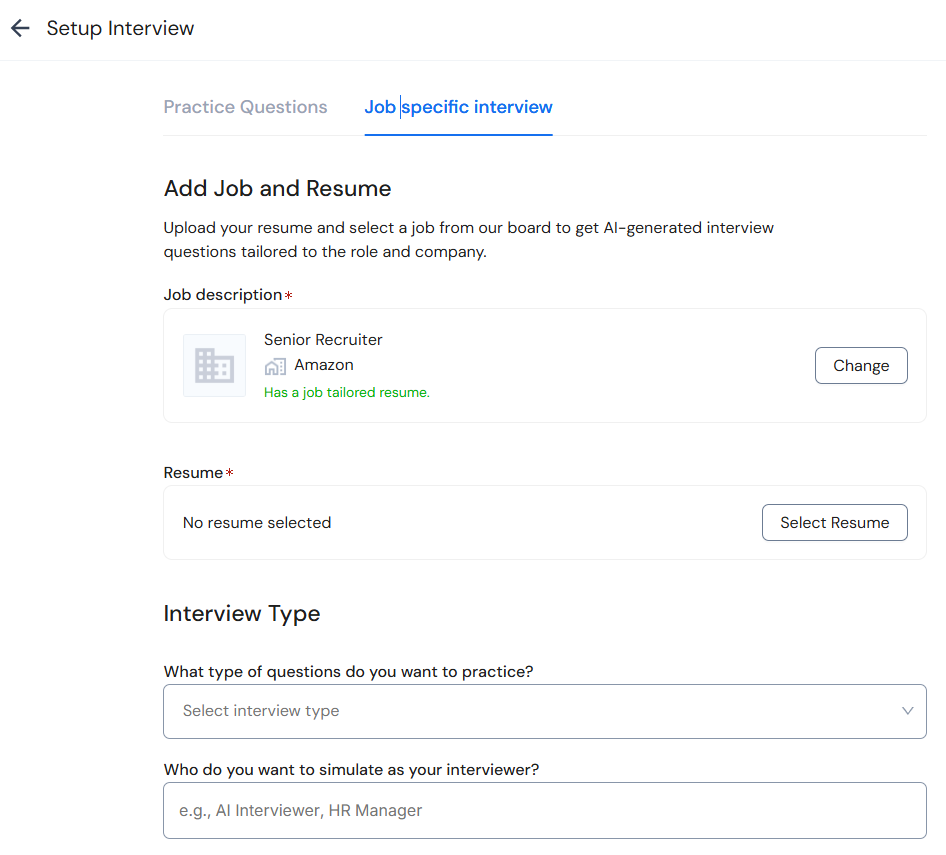
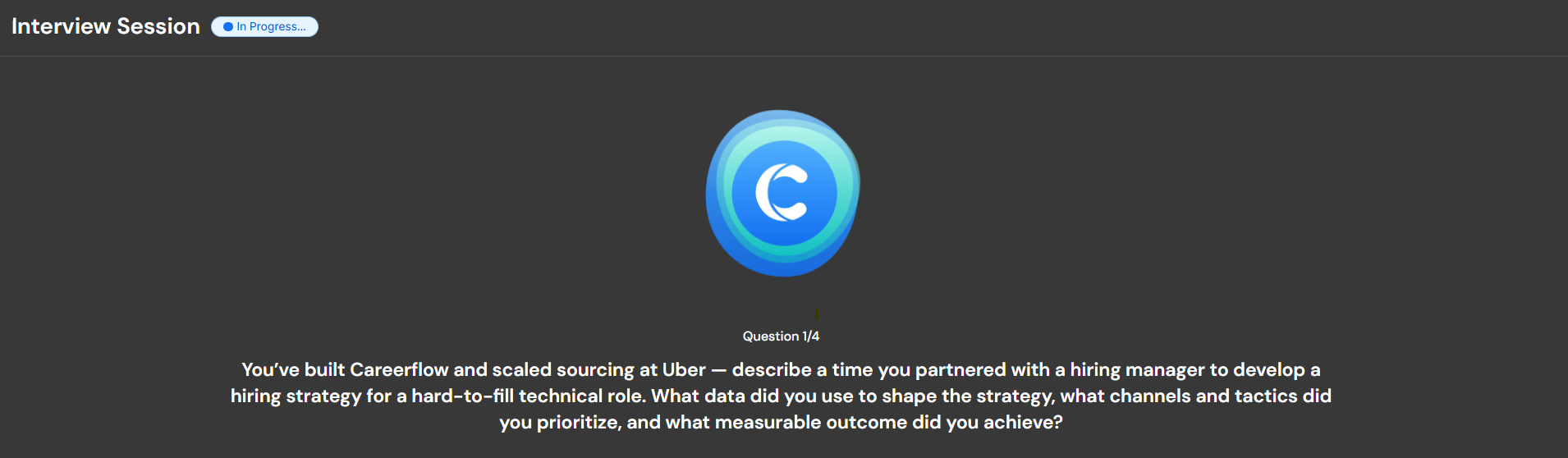
3. Begin a session and answer the questions out loud while the AI records your answers.
4. Look at the instant feedback the AI gives you. It checks your answer structure, clarity, speaking speed, use of examples and confidence level.
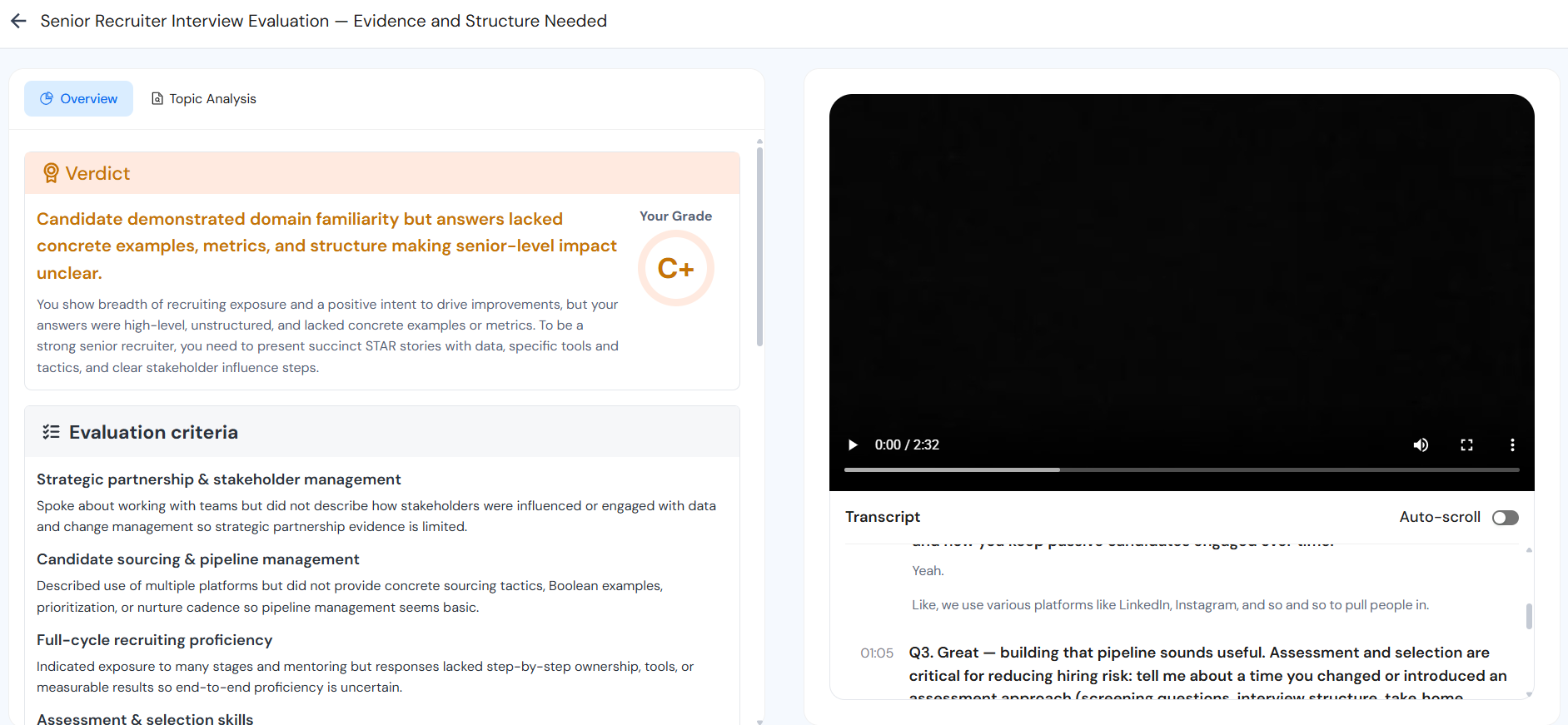
5. Re-record your weak answers right away. Use the feedback to make your score better.
6. Watch your progress over several practice sessions to see how much more consistent and confident you become.
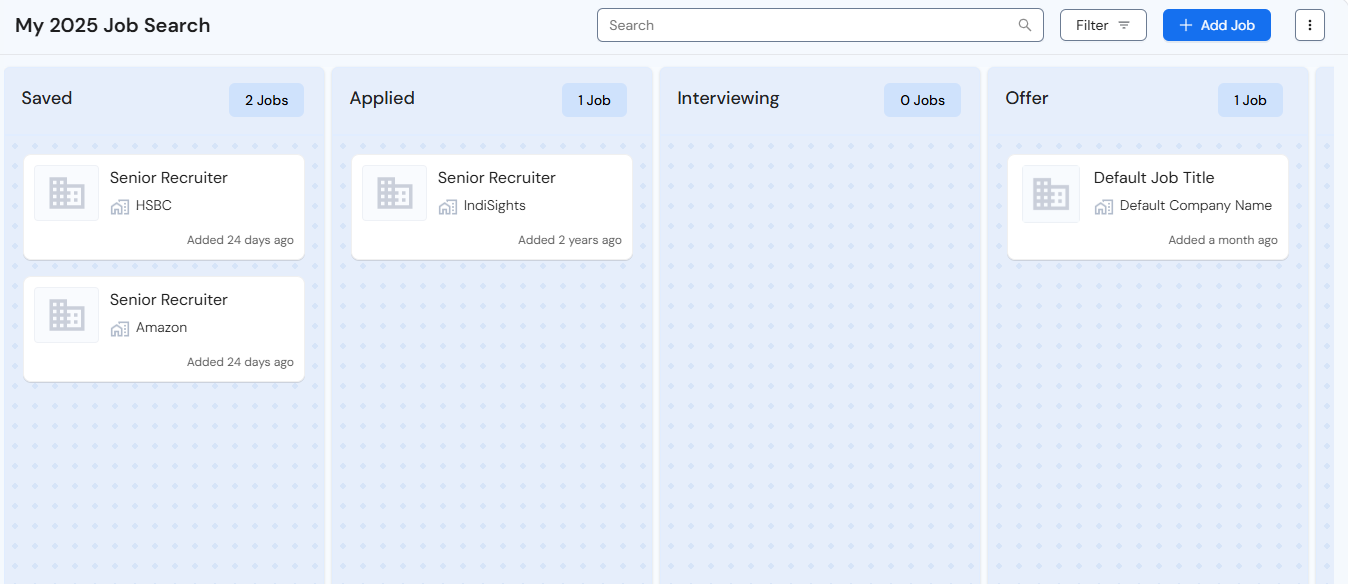
✅ Resume Builder and Optimizer
Our resume is the base for all your best interview stories.
- Use the AI Resume Builder to insert main accomplishments in the resume using numbers and clear results.
- Every strong bullet point on your resume can be the "Result" part of your STAR story. Work backward to add the situation, task, and action that led to that result.
- Run your resume through the Resume Optimizer. This makes sure your achievements match the job you're applying for. This tool tells you which stories you should focus on the most in the interview.
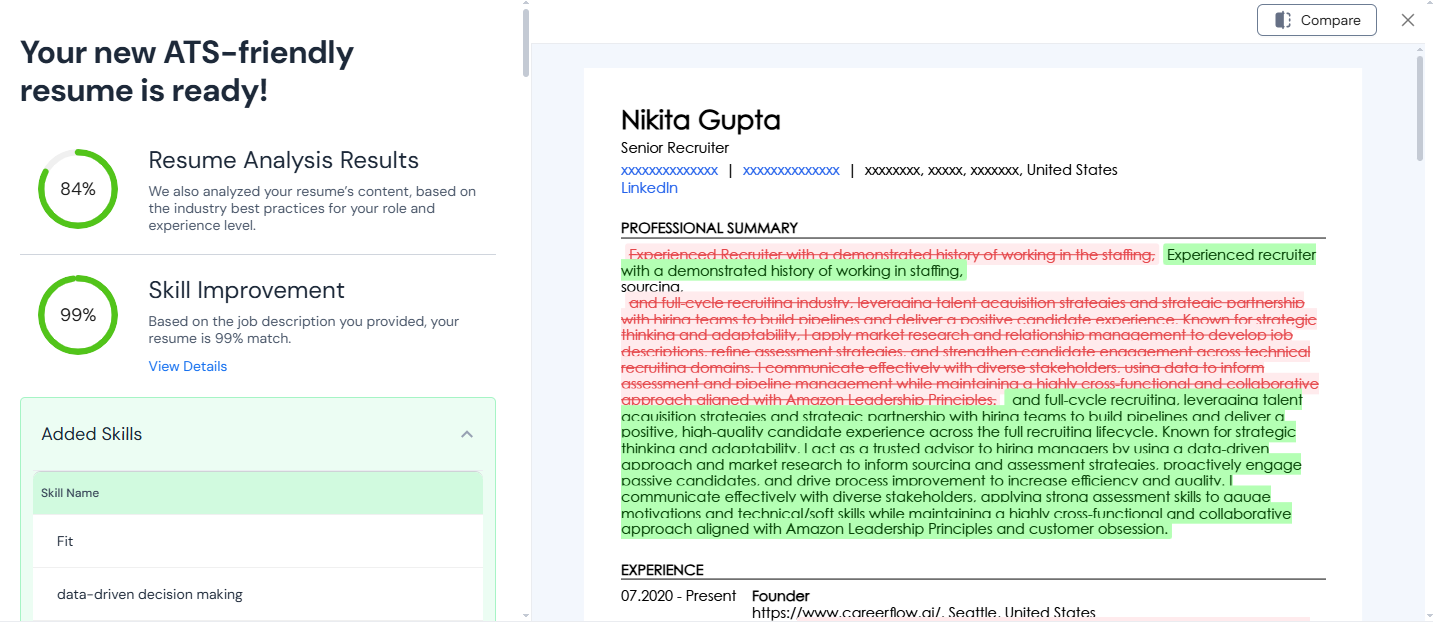
✅ Job Tracker (organize your preparation)
The Job Tracker helps you stay organized when applying for many jobs.
- Make a separate entry in the Job Tracker for every job you're interviewing for.
- Write notes in the tracker for that specific job. Include the questions you prepared, your company research, and the main stories you plan to tell.
- After every interview or mock session, write down notes about how you did and what you need to improve next time.
- Use this tool as your main place to keep track of all your interview plans.
Special cases: Practicing when you have limited experience
It can be hard to find professional stories if you're a student, changing jobs, or have a work gap. Use all your life experience:
- Students/New graduates: Use projects, internships, part-time jobs, and club leadership. Frame these using the STAR method. Focus on skills that transfer to the job, like teamwork and problem-solving.
- Career switchers: Point out your transferable skills from your old job. Talk about new courses or side projects in your new field. Practice a clear, confident story about why you're making the change.
- Employment gaps: Prepare a short, honest reason for the gap. Immediately follow up with what you did during that time to stay skilled (courses, projects). Quickly shift the focus to your strong interest in the new job.
How long and how often should you practice?
The key is quality practice spread over time, not long marathon sessions.
Key Rules:
- Quality over quantity: Three focused 30-minute sessions with honest self-review are better than one long session where you're not truly concentrating.
- The "Rule of Three": Practice each key question at least 3 times over different practice sessions. This builds strong answers without memorizing them.
.webp)